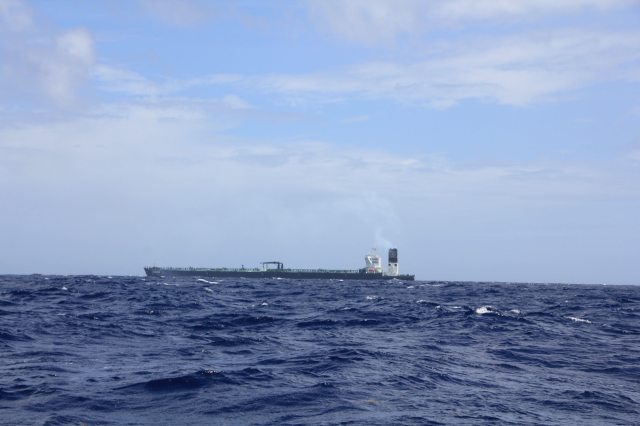
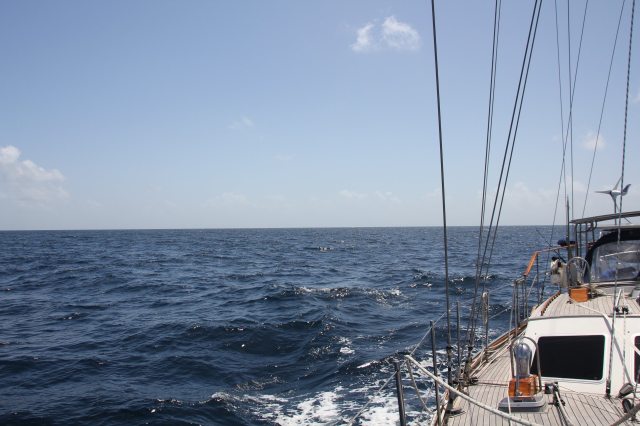
Saying Goodbye to Hawaii at Makua Bay, Oahu

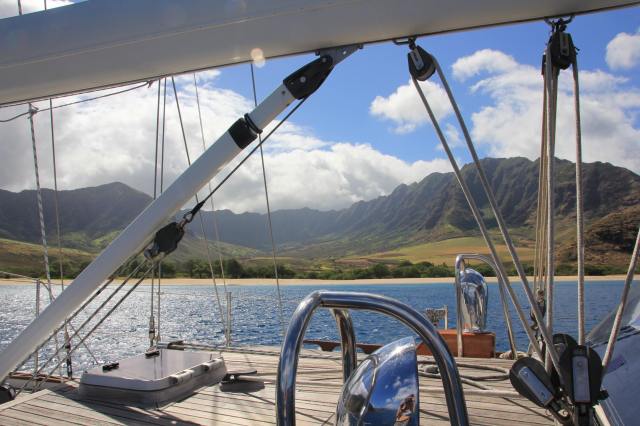
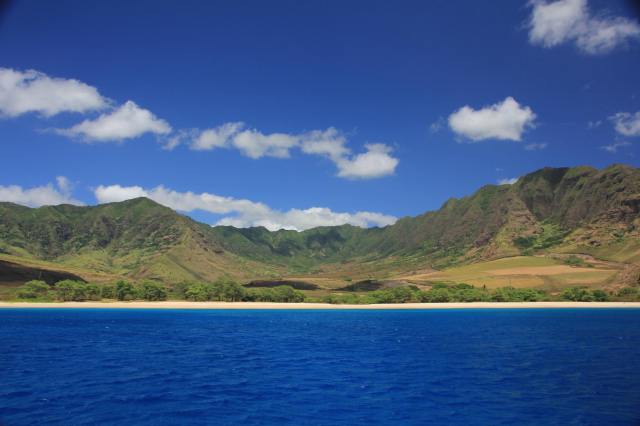
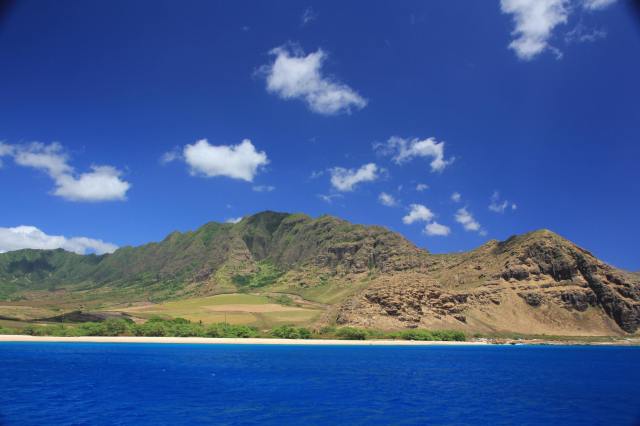
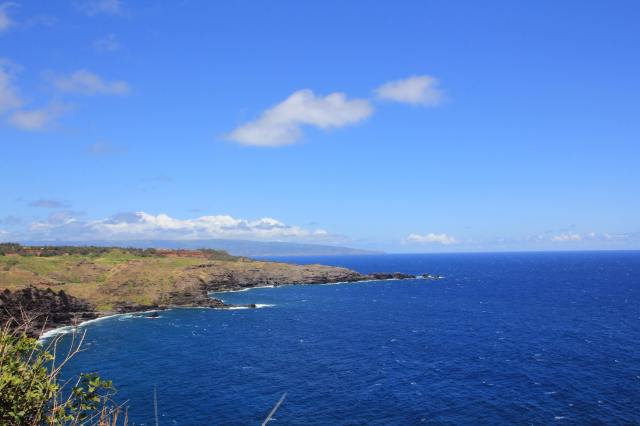
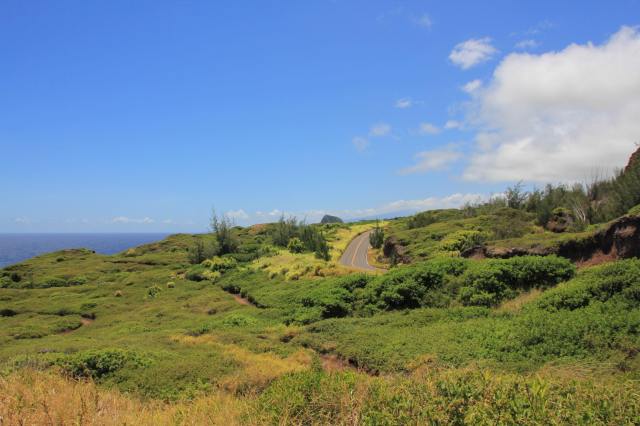
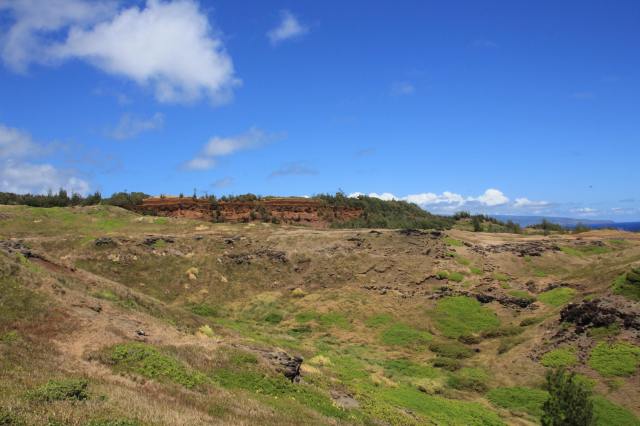
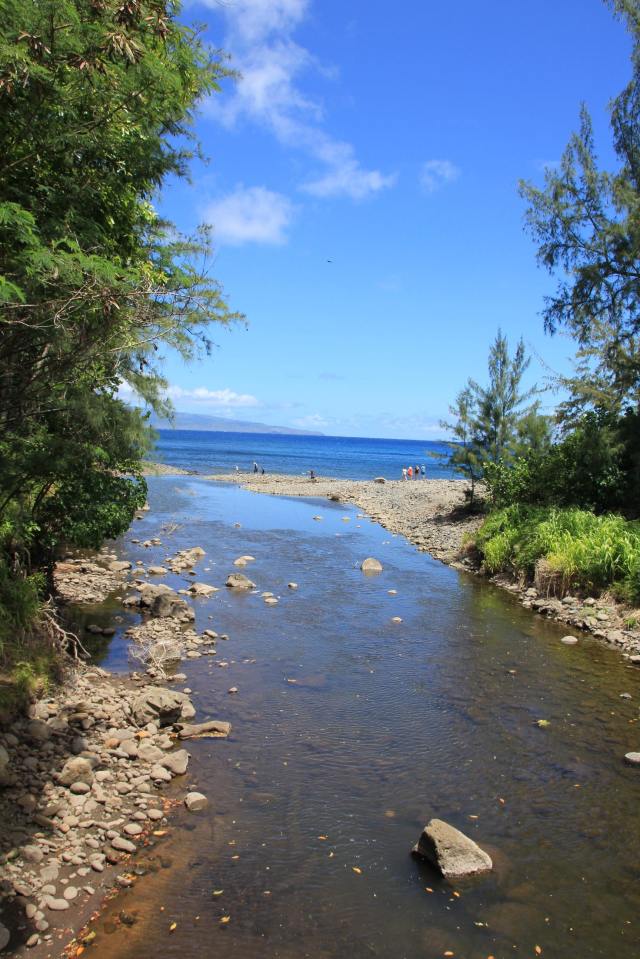
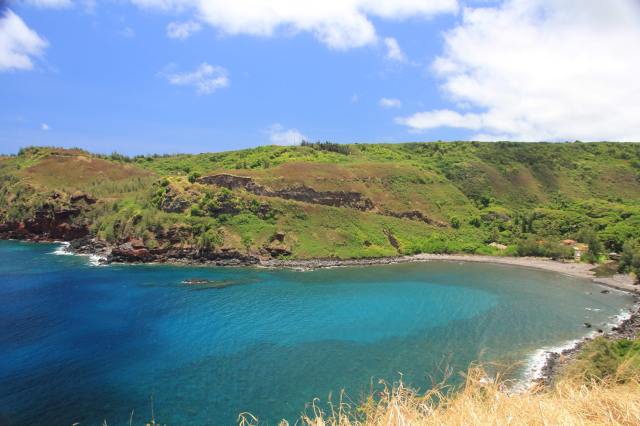
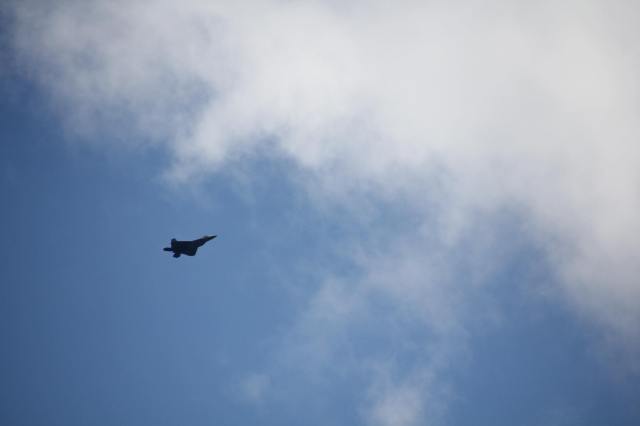
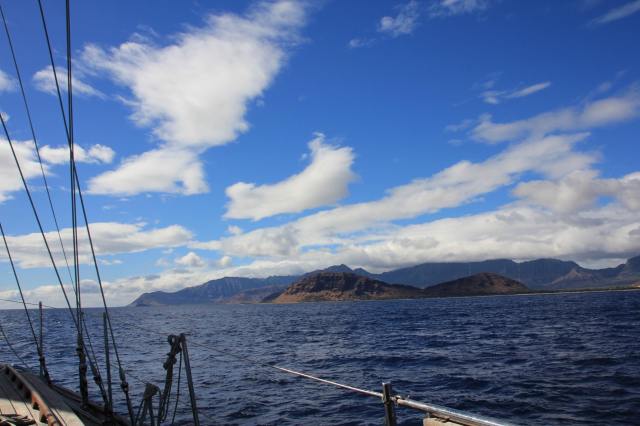
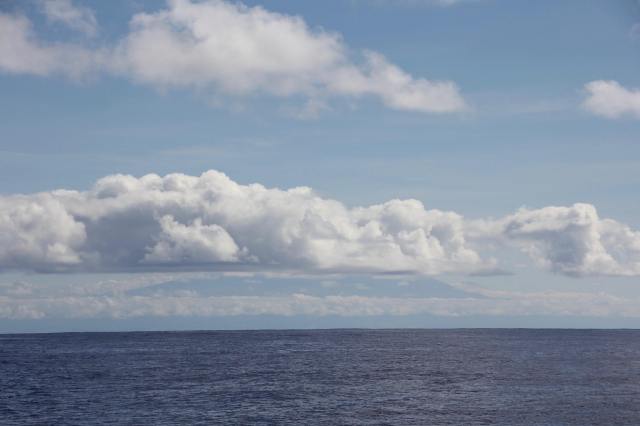
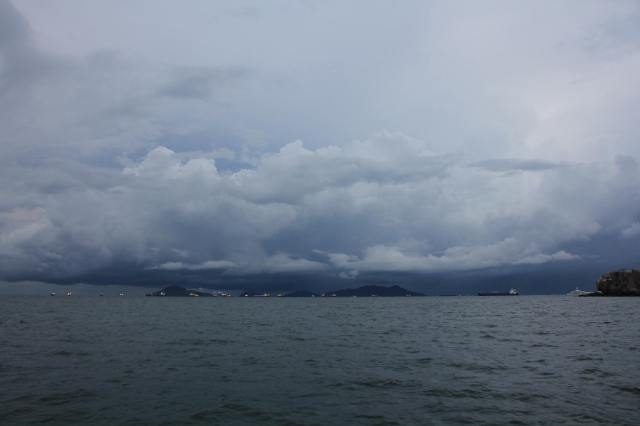
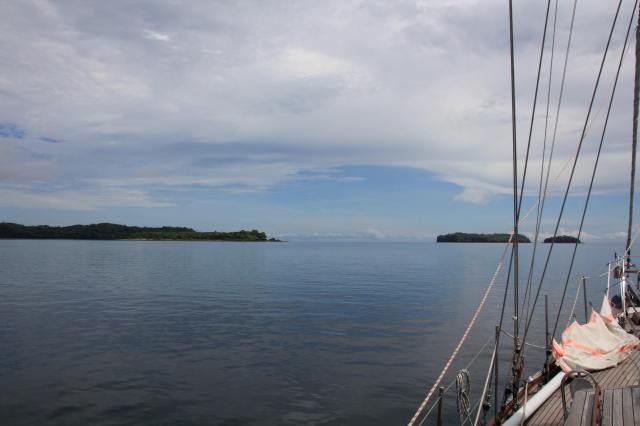
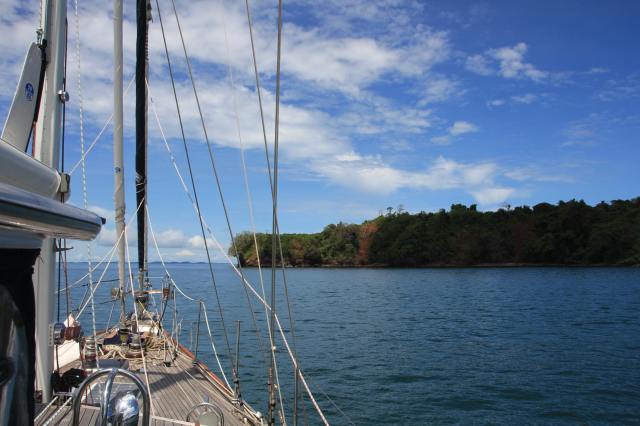
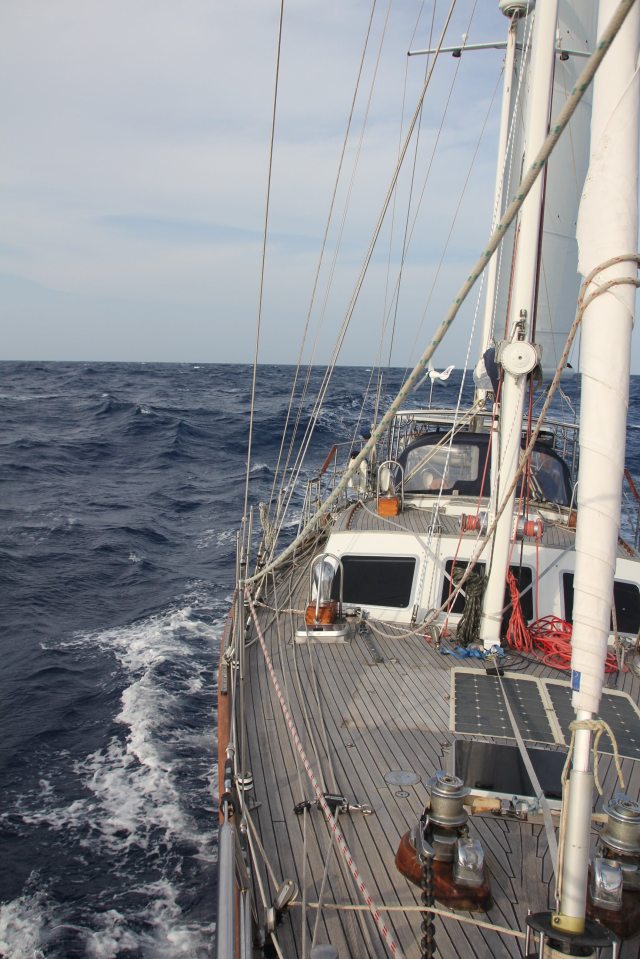
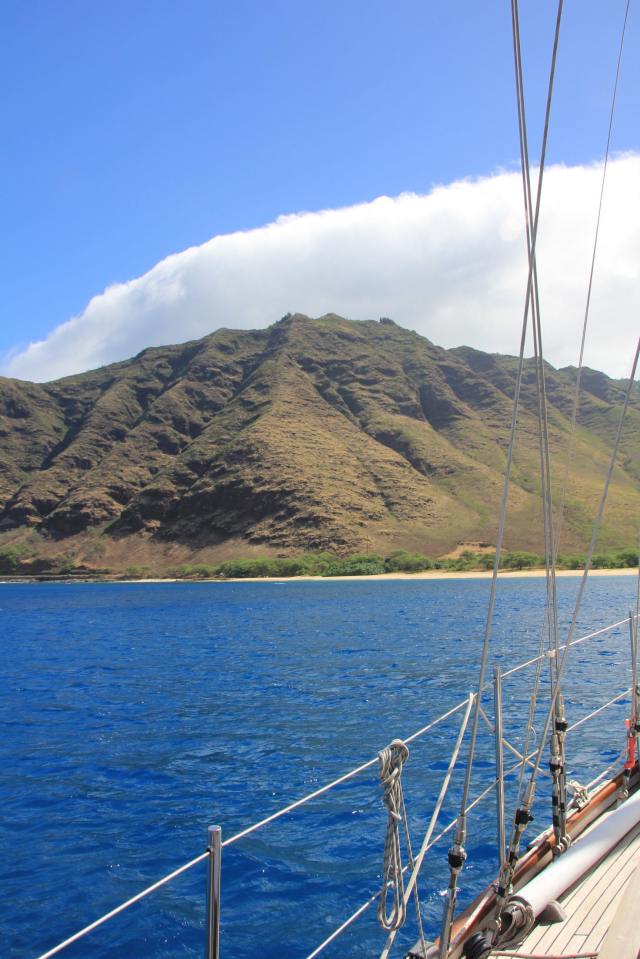
Our last anchorage in the Hawaiian Islands was supposed to be for one night while we got the dinghy and outboard motor packed up, but when we arrived into the stunning Makua Bay on the north west of Oahu we just felt the need to stay a little longer.  Clear blue water, a long sandy beach with volcanic rock dotted about and the grand Makua Valley behind all add to the spectacular scenery here.   During World War II the military took over the Makua Valley for a bombing range and still use this valley today.

IMG_6453-squashedIMG_6457-squashedIMG_6459-squashedIMG_6460-squashed

IMG_6464-squashed

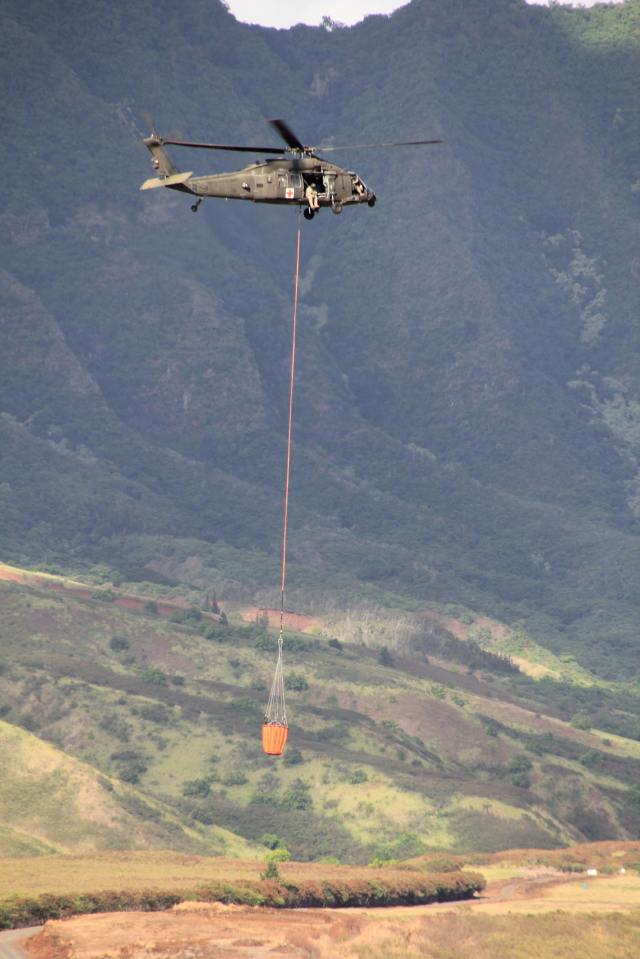
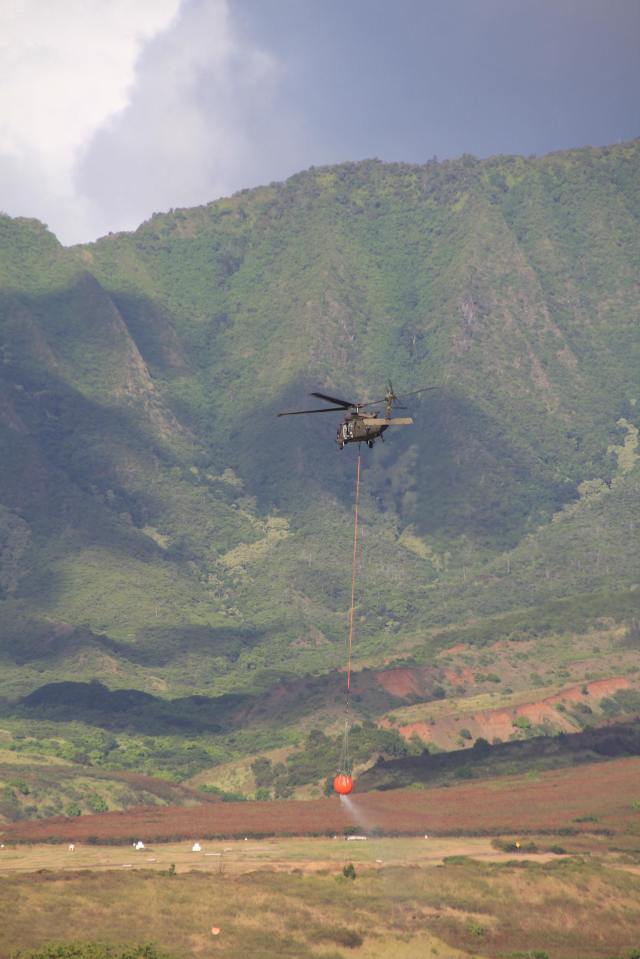
An afternoon’s entertainment watching this helicopter collect water and dump it inland

IMG_6472-squashed

IMG_6427-squashed

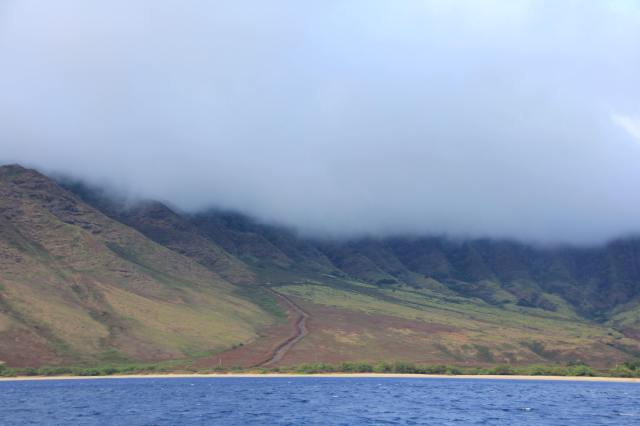
Clouds roll in to the valley late afternoon

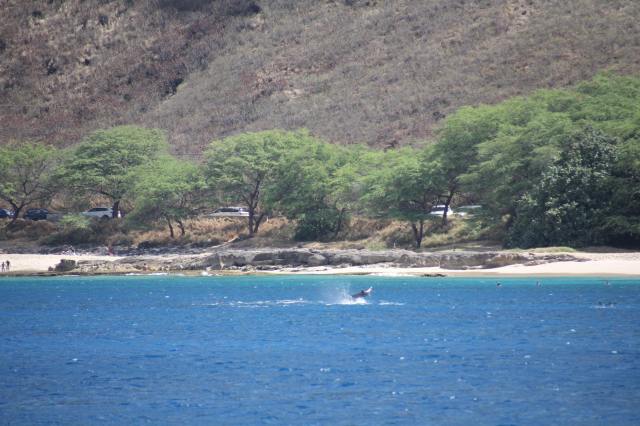
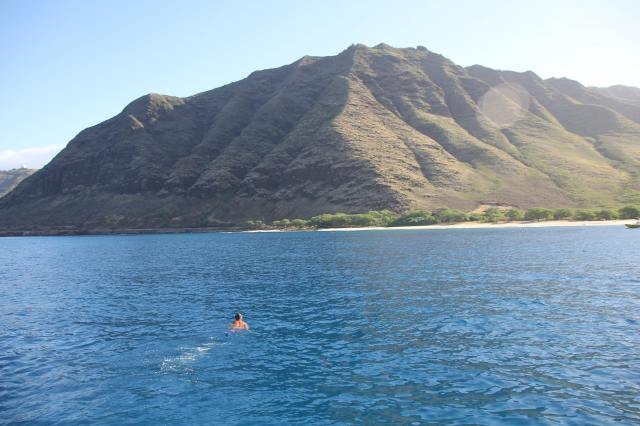
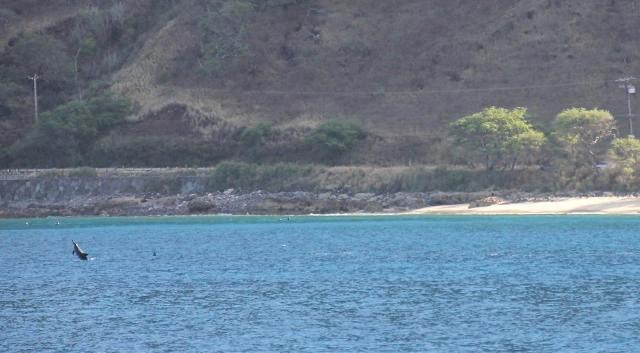
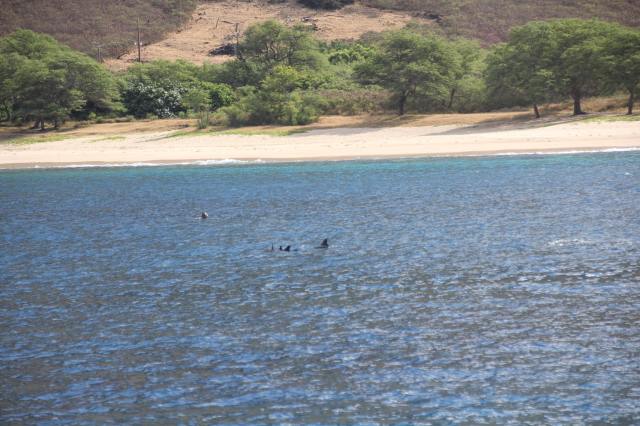
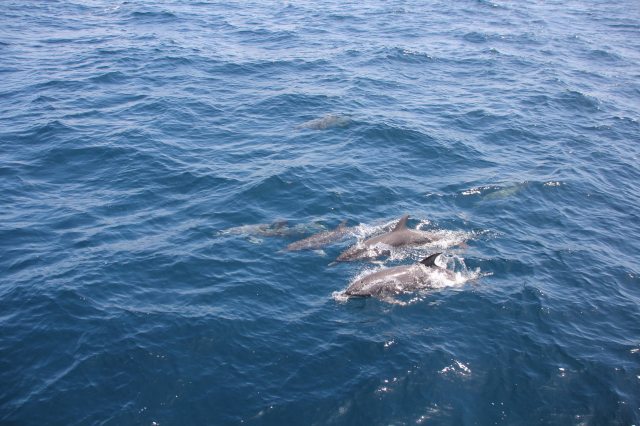
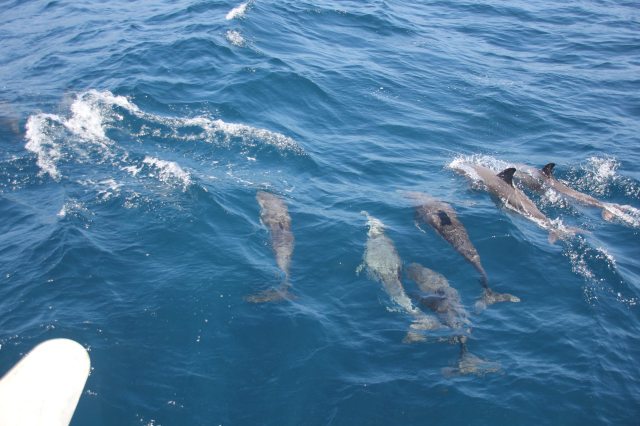
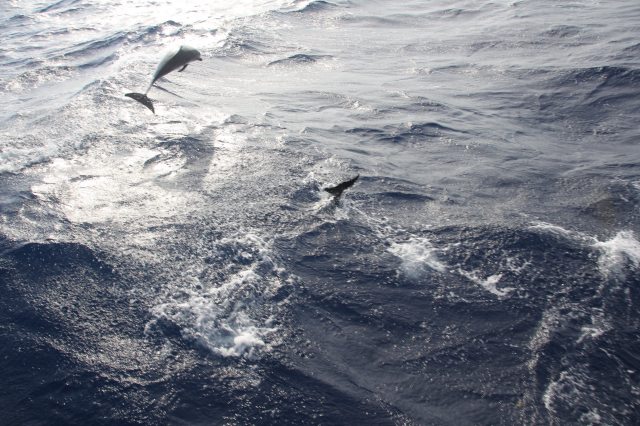
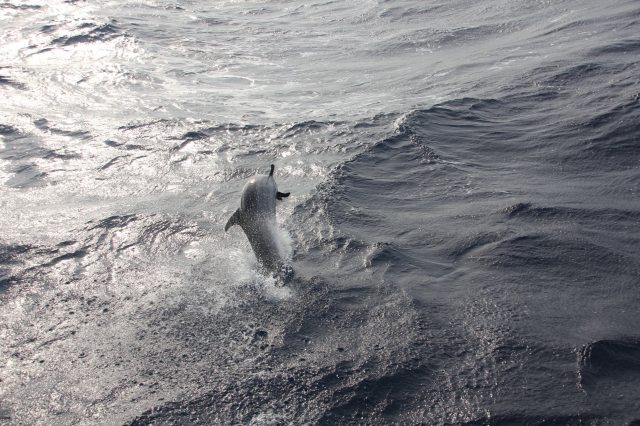
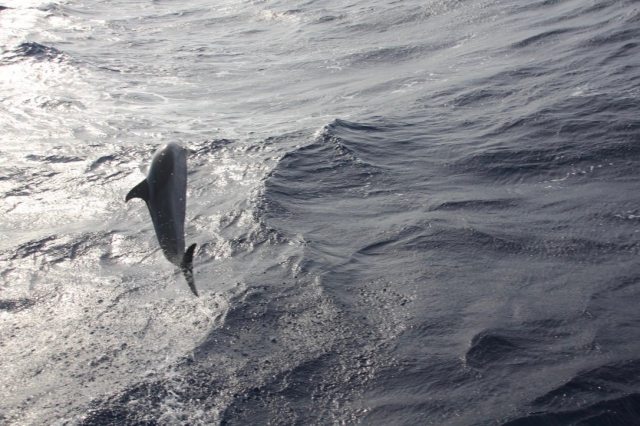
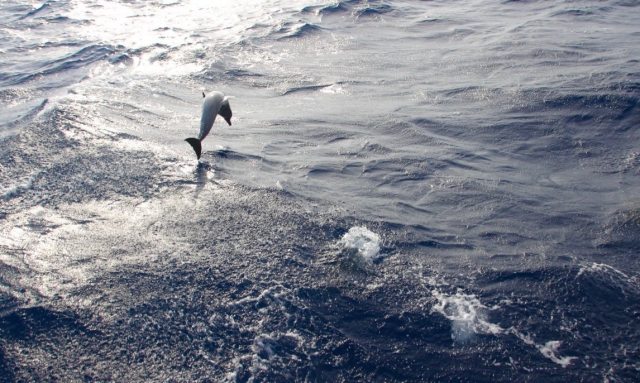
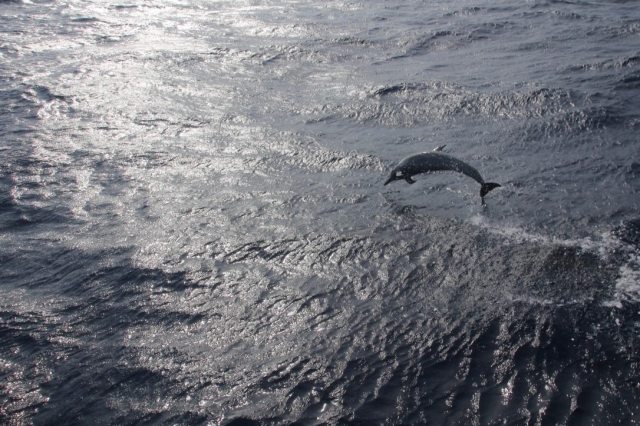
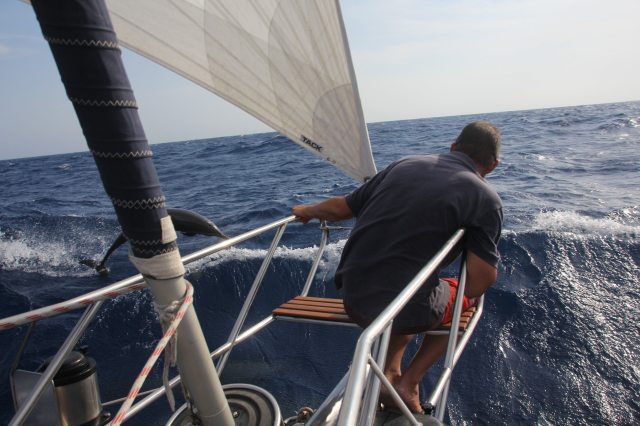
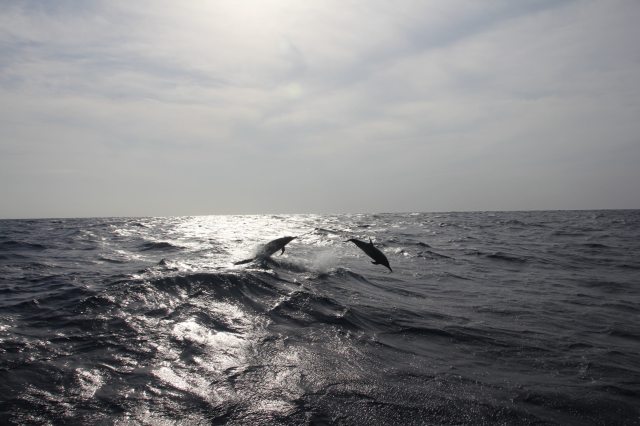
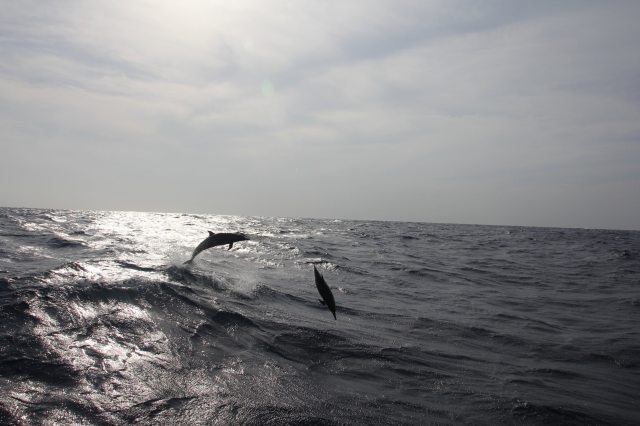
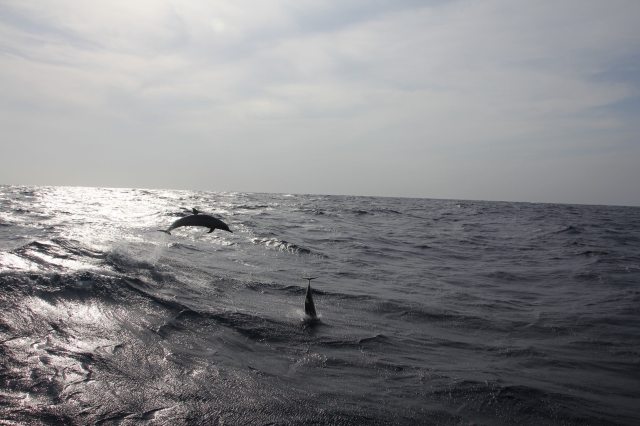
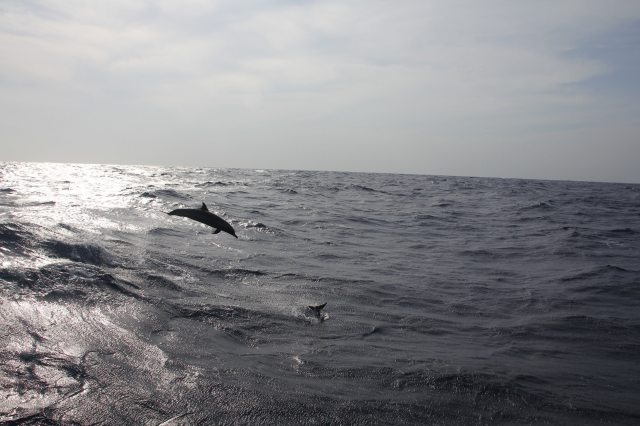
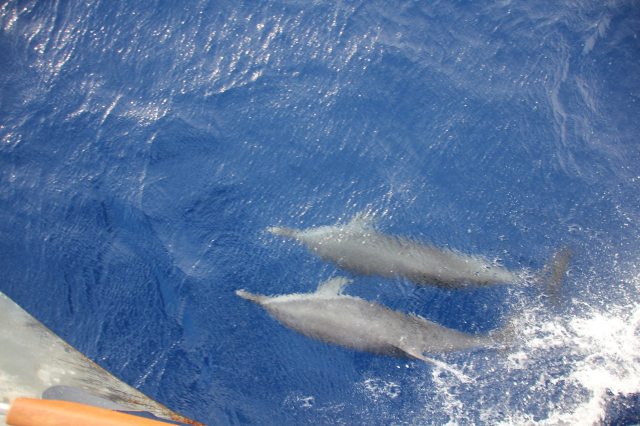
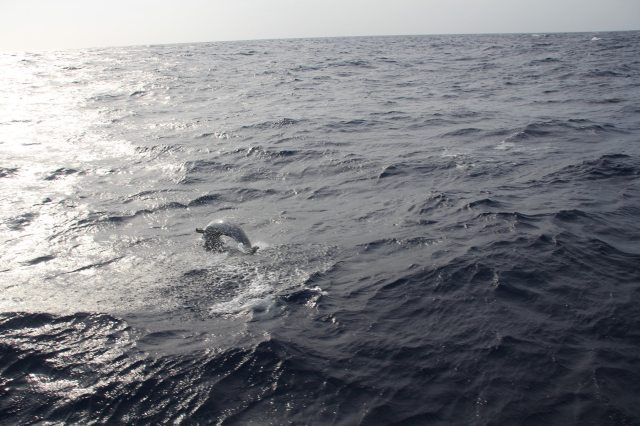
It was great to have our last swim and snorkel in warm waters before heading to Alaska, and yesterday morning Jez swam over to a group of spinner dolphins across the bay and got to snorkel with these beautiful playful creatures.

IMG_6443-squashed

IMG_6500-squashed

Jez heading off in search of dolphins

IMG_6503-squashed

IMG_6550-squashed

Snorkelling back to the boat escorted by dolphins


What a great way to end our visit here, now we are packed up and ready to move on. The duvet is out and ready along with thermals and wet weather gear, next stop Sitka in South East Alaska 2600 miles away.

Posted in Hawaii | Leave a comment

Maui, Hawaii

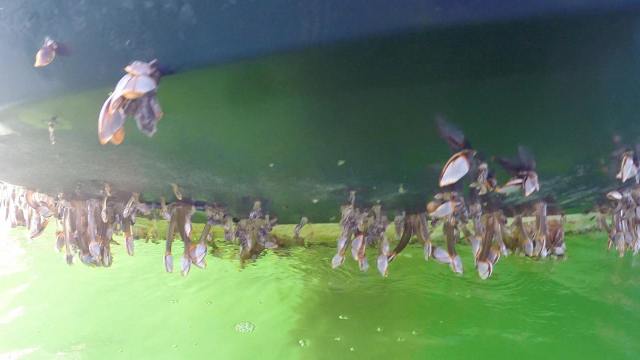
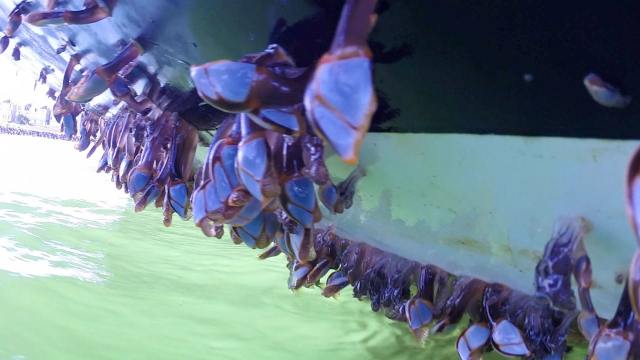
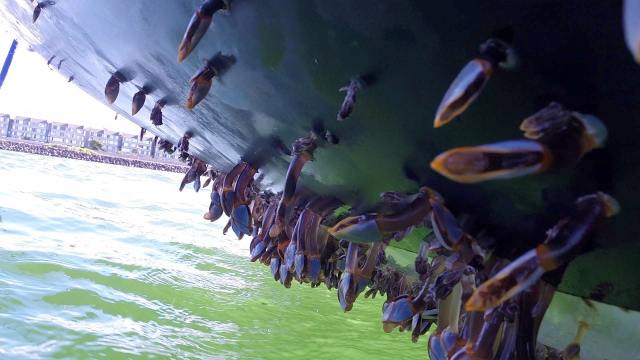
The beautiful mountainous backdrop to the harbour was certainly a welcome view, after anchoring up in the designated area in the commercial harbour the wind returned and blew 15-20 knots almost from the moment we arrived.  We had quite a big shock when we relaunched the dinghy, discovering Joy had picked up and nurtured a nice crop of gooseneck barnacles on the five week sail, we have never seen anything like this before!!

Joys Bottom 1-squashedJoys Bottom2-squashedJoys Bottom3-squashedJoys Bottom4-squashed

The harbourmaster and his staff welcomed us and encouraged us to stay a little longer than planned, they organised a place for us to leave the dinghy in the restricted commercial docks and allowed us to use this every day as well as park our rental car inside the secure compound.  What delightful staff, everyone has been so friendly and helpful and our thanks go out especially to Shayna in the harbour office who went out of her way to assist us, what an absolute star. So we stayed four nights and this enabled us to reprovision, get the essential SIM card for our internet connection and explore the island by car. With two shopping malls and at least four supermarkets close to the harbour we were able to find everything we needed, it was great to have fresh produce again including locally grown salad leaves and pineapples.

IMG_6312-squashed

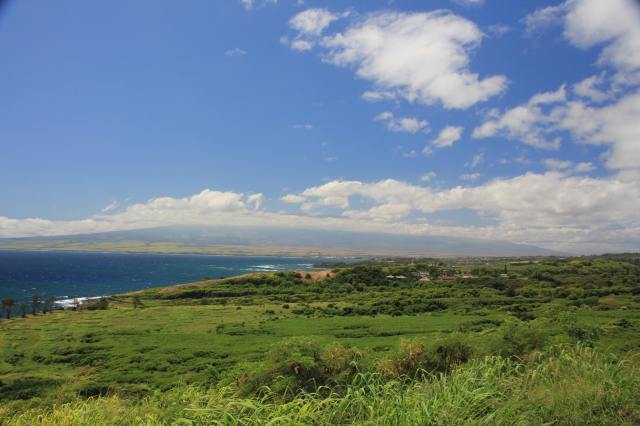
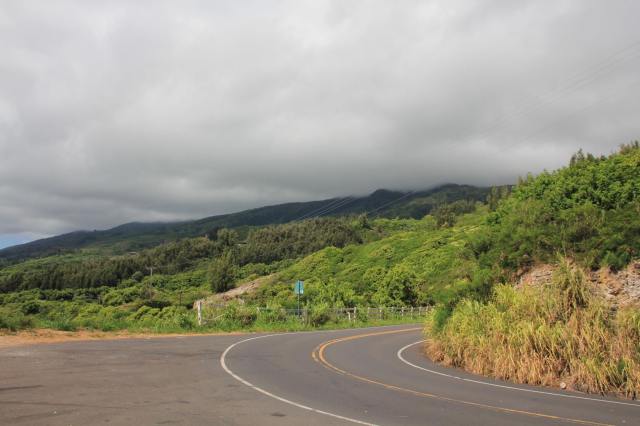
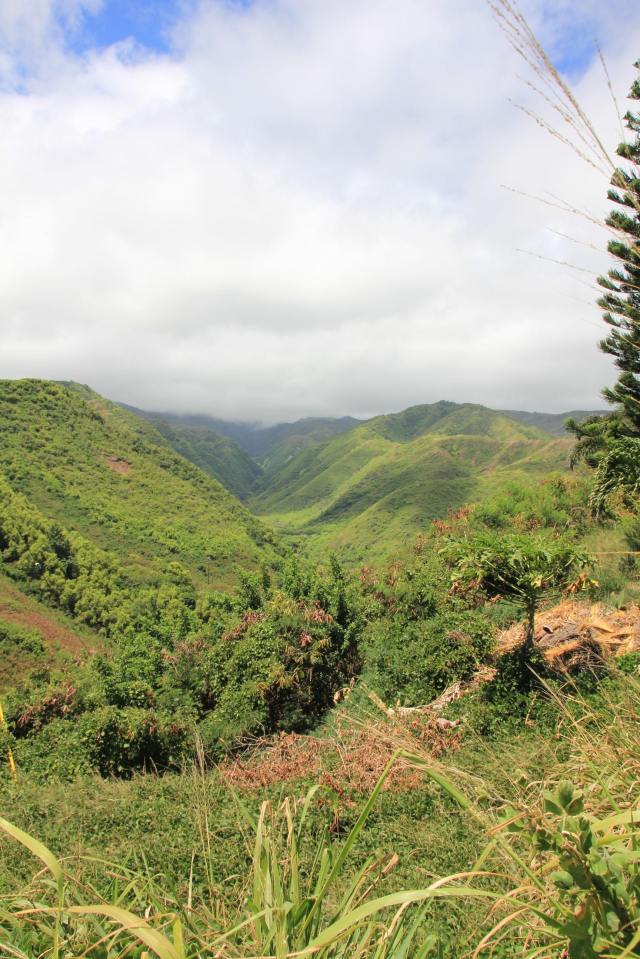
The view from West Maui mountains to ‘Up Country’ 

IMG_6313-squashedIMG_6315-squashedIMG_6319-squashedIMG_6320-squashedIMG_6322-squashedIMG_6324-squashedIMG_6327-squashedIMG_6329-squashedIMG_6332-squashedIMG_6334-squashedIMG_6336-squashedIMG_6341-squashedIMG_6342-squashedIMG_6345-squashedIMG_6352-squashedIMG_6353-squashedIMG_6354-squashedIMG_6357-squashedIMG_6358-squashedIMG_6360-squashedIMG_6361-squashedIMG_6362-squashedIMG_6363-squashed

IMG_6364-squashed

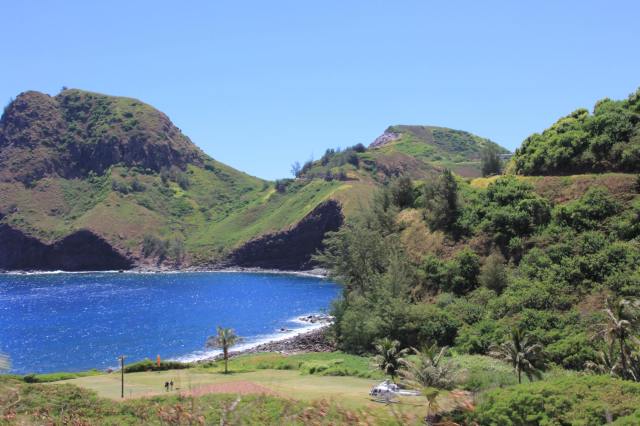
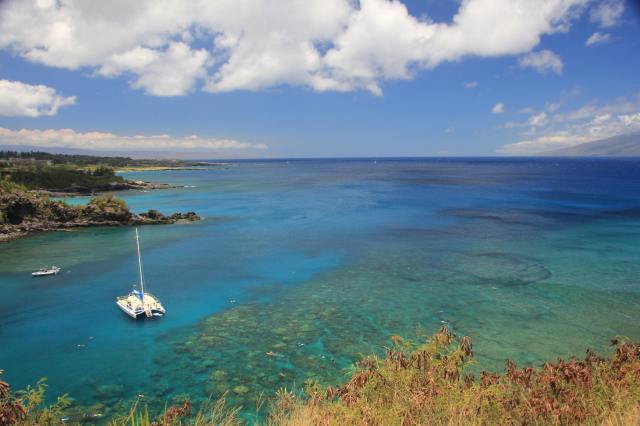
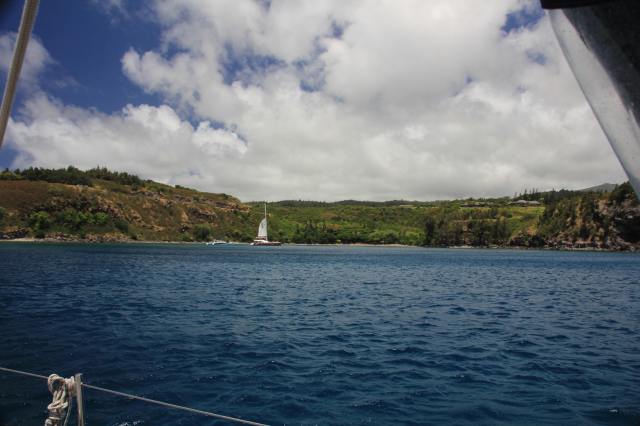
Honolua Bay is a popular snorkelling destination for the many tourists on this island

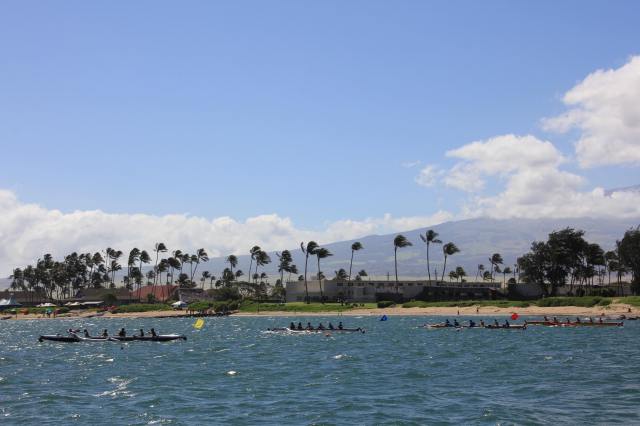
We left the harbour on Saturday morning after watching the canoe races off the small beach here, these guys have been practising all week and I got quite worn out just watching them.  They row around the large harbour dozens of times battling against the strong winds and choppy sea, super fit people.  Our next anchorage was on the north of the island in a beautiful bay called Honolua, the sail there was lively with a capital L.  With 25-30 knots of brisk trade winds and some pretty heavy swell these waters give some exhilarating sailing conditions. After doing some research on where to refuel, not many places in the islands have fuel docks instead you have to use jerry cans from the fuel station, I found a marina in Oahu who had a fuel dock and a good price so we made the decision to sail over to Oahu the following day.  Another very lively sail down the channels in-between the islands, Molokai to the north of Maui and Lanai to the west, then across another channel to Oahu and around to Waikiki Beach just south of Honolulu.  More 30 knot winds and breaking waves as the water is forced up between the islands into shallower water.  A great 12 hour sail, we arrived off Waikiki Beach just as the sun was going down.

IMG_6381-squashed

Kaluhui Harbour canoe races

IMG_6383-squashed

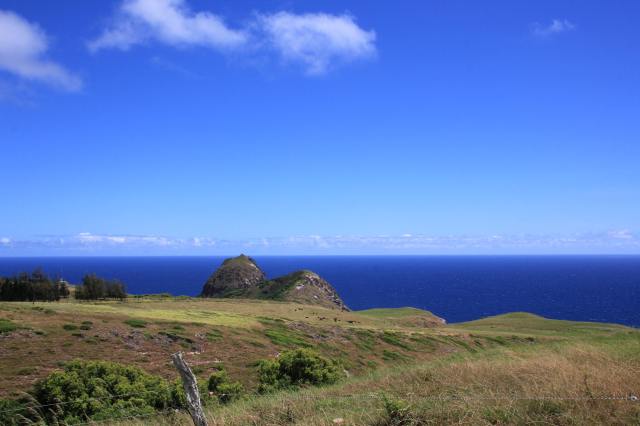
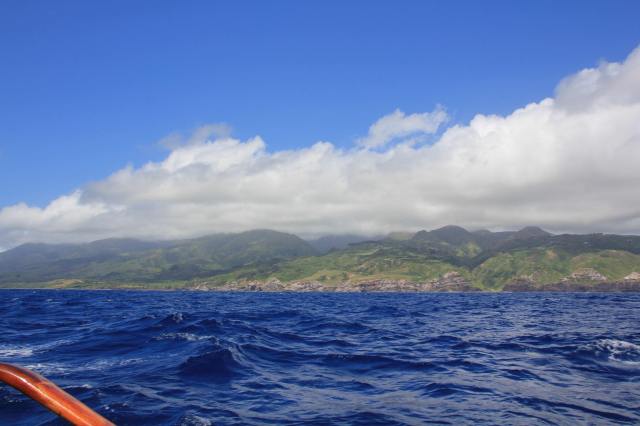
Leaving the West Maui mountains behind us

IMG_6385-squashedIMG_6389-squashedIMG_6393-squashed

IMG_6395-squashed

Coming in to Honolua Bay

IMG_6399-squashed

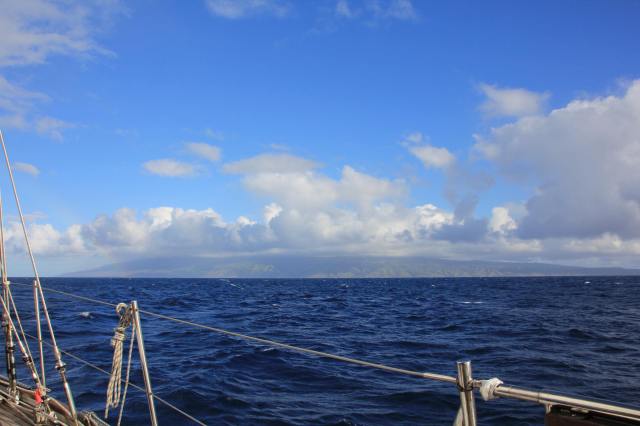
The island of Molokai in the distance 

IMG_6400-squashed

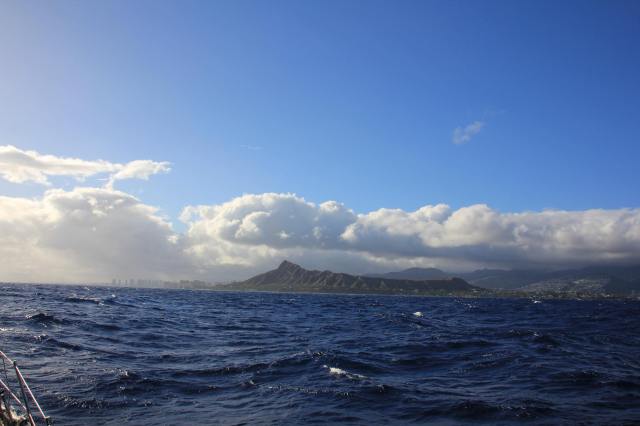
Rounding Diamond Head on Oahu

IMG_6401-squashed

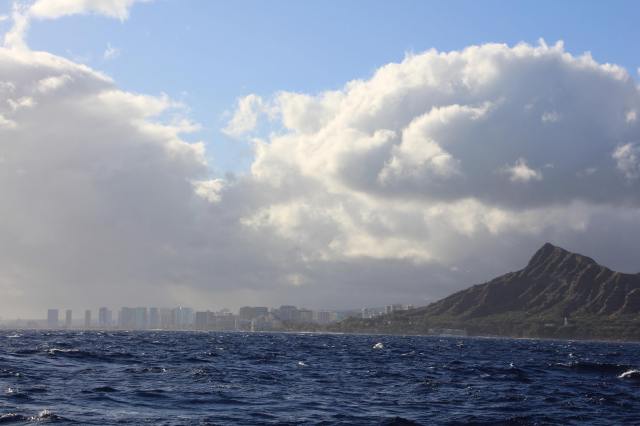
The city of Honolulu in sight

IMG_6404-squashedIMG_6407-squashed

IMG_6410-squashed

Anchored off Waikiki Beach, a long way off actually as the water shoals quite rapidly

IMG_6414-squashed

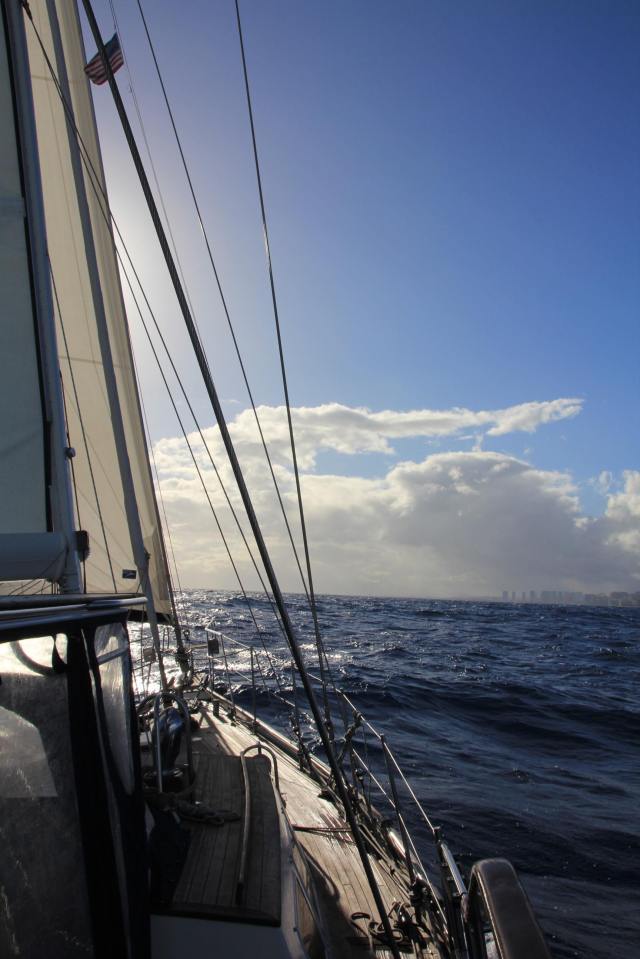
After an awful night rolling from ear to ear, side on to a southerly swell, we moved on to the marina further up the coast to refuel.  A much more sedate sail in 15-20 knots on the lee side of Oahu was pretty awesome and we found our last anchorage at Makua.  We now have some organising to do and the dinghy and outboard to put away as we have a semi-reasonable weather window for the next passage to Sitka, Alaska.  It’s been a very fleeting visit to these beautiful islands and I really hope one day we get to return.

IMG_6418-squashed

IMG_6420-squashed

One of the many warships on exercise outside Pearl Harbour

IMG_6424-squashedIMG_6425-squashed


Posted in Hawaii | Leave a comment

Land Aloha!

As night fell on day 35 at sea an orange glow appeared on the horizon. Just over 70 miles away, the lava flow on Hawaii ‘The Big Island’ was burning bright.  By daybreak land was in view, although we were 35 miles or so offshore mainly because the wind and current had taken us that way. The southern part of the island remained completely hidden behind thick ‘vog’, through the binoculars we could see steam rising from the ocean in various places.  The dormant volcano on the Northern part of the island was visible though and pretty impressive, even from a distance.

IMG_6233-squashed

Lava flowing into the sea creating a cloud of steam and gases

IMG_6228-squashed

IMG_6237-squashed

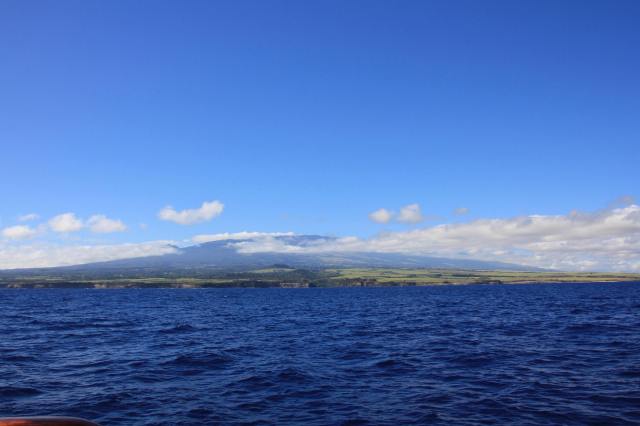
Mauna Kea is a dormant shield volcano at the north of The Big Island, with 4,207 metres above sea level most of it is under water. Measured from its oceanic base it is over 10,000 metres tall which makes it the tallest mountain in the world. An impressive sight from 32 miles away!

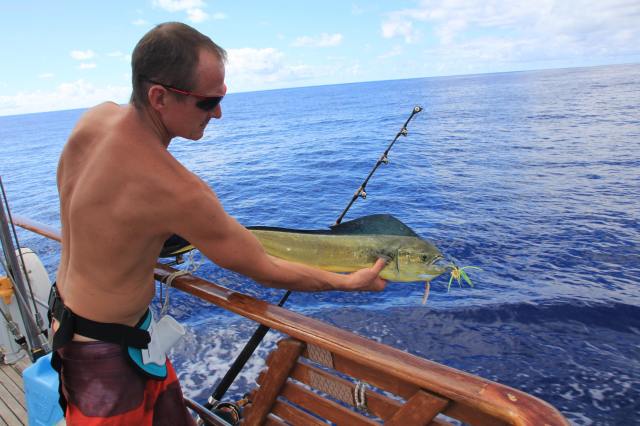
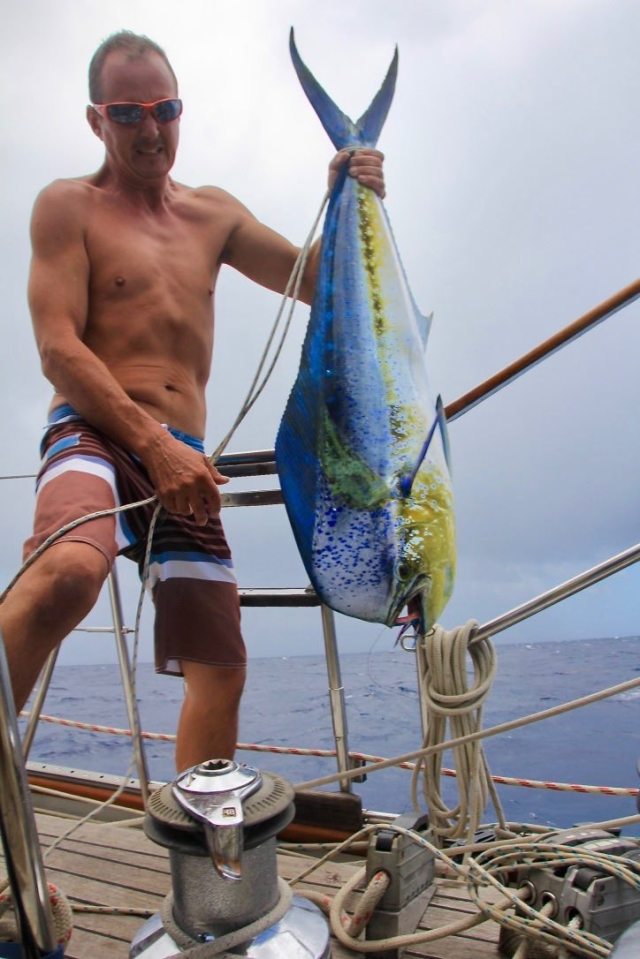
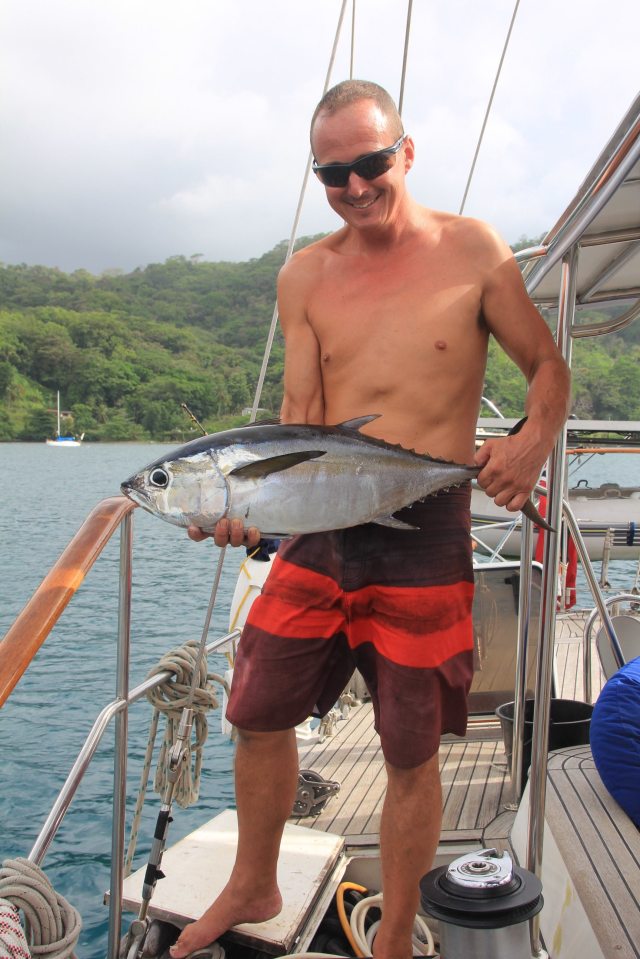
By mid afternoon the wind had completely died on us, with less than 5 knots of wind and a mirror calm sea we were going nowhere and the sails were flogging badly.  Reluctantly we turned on the engine and furled the sails away, always an anticlimax. I sanded down and restained the teak cap rail which had been stripped of its protection by 5 weeks of salt and sun, and Jez put out the rod again. Very shortly he had caught another Mahi Mahi for supper, the fishing on this passage has been excellent and we have eaten fish every day for the last month.  By dark we were approaching the notorious channel in-between The Big Island and Maui and the lava flow glowed its beautiful orange yet again.

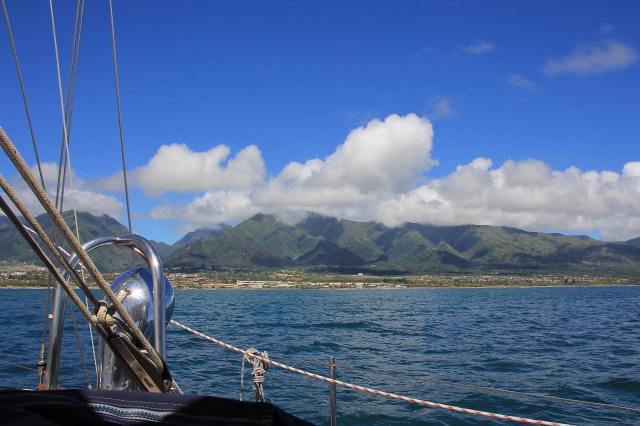
The wind sadly didn’t return, so under motor we arrived into Kahului Harbour on the east coast of Maui around 11am on day 37 having travelled 5,141 miles from Panama.  The sight of the dramatic mountains on Maui was a welcome sight after nothing but sea and sky for five weeks.

IMG_5838-squashed

Leaving a very stormy Panama behind us

IMG_5839-squashed

IMG_5844-squashed

Las Perlas Islands made a quick stop over to clean the prop

IMG_5846-squashedIMG_5847-squashed

IMG_5854-squashed

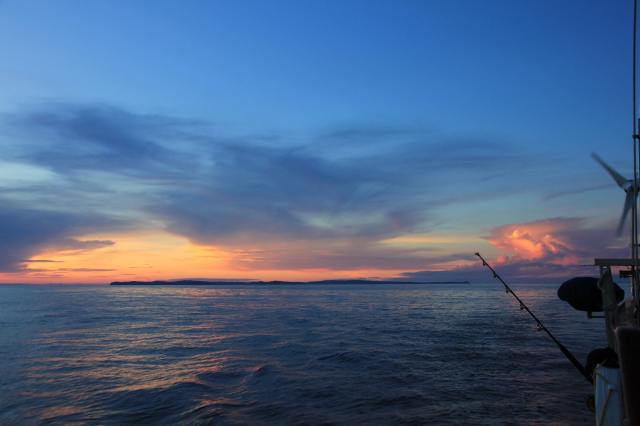
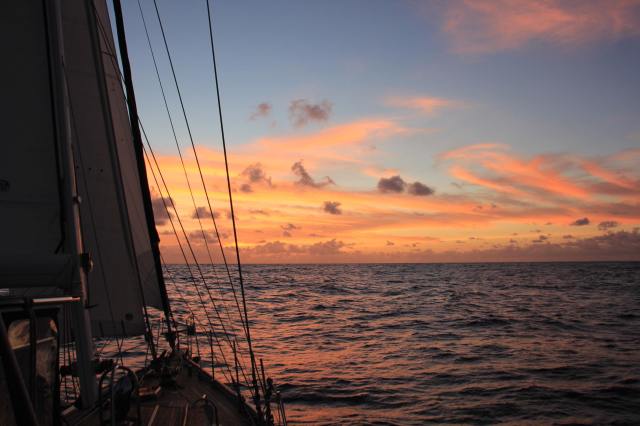
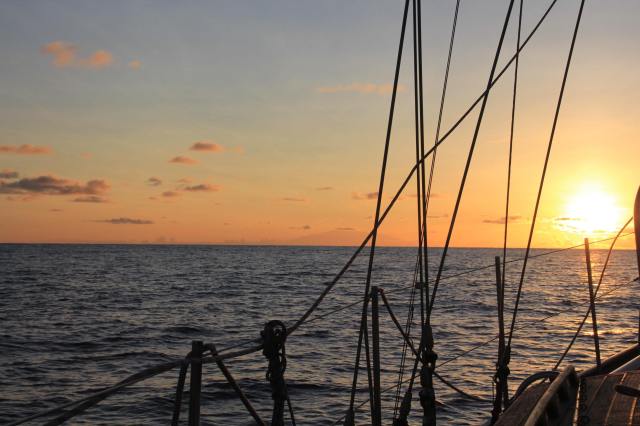
Saying goodbye to land under an orange sky

IMG_5933-squashed

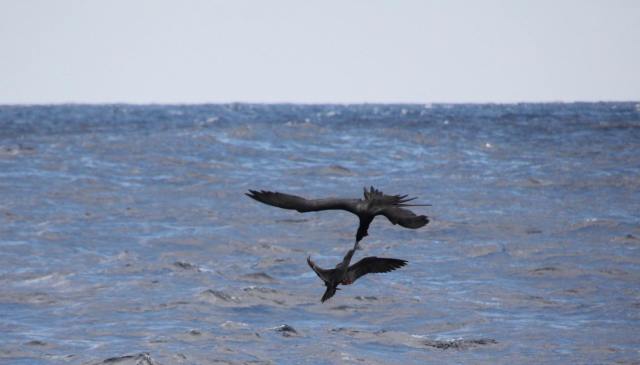
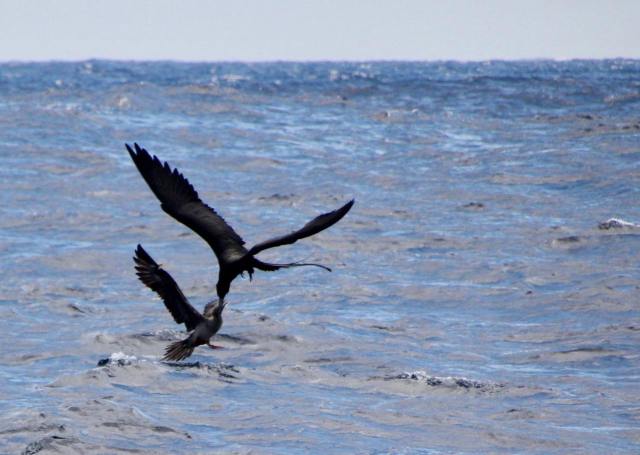
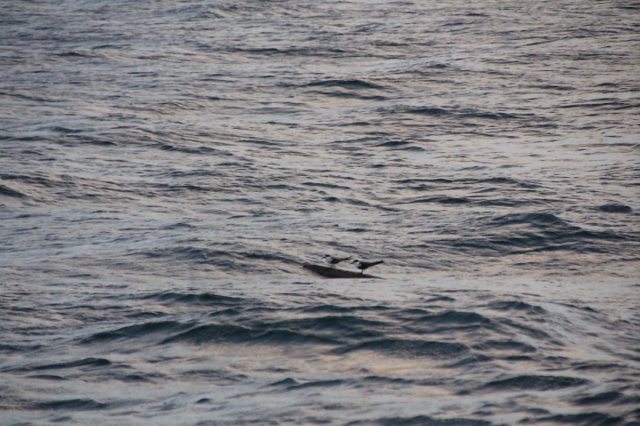
This frigate bird, a few hundred miles offshore, attacks another seabird in an attempt to steal his catch

IMG_5934-squashedIMG_5949-squashed

IMG_5989-squashed

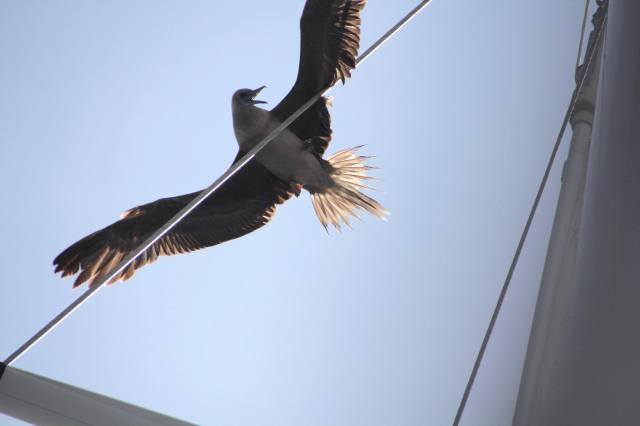
This booby flew straight into our shrouds!

IMG_6012-squashed

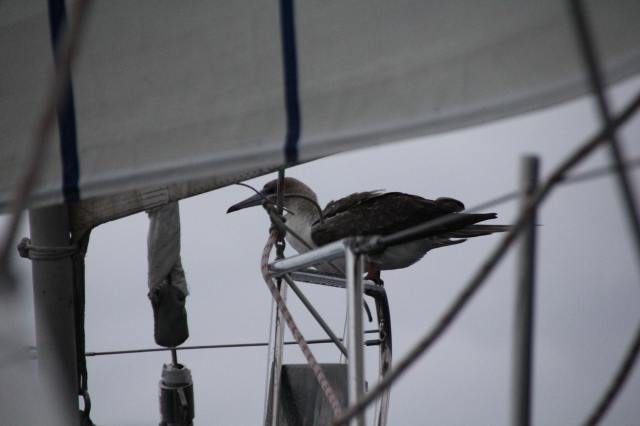
A cling-on on the starboard bow

IMG_6051-squashed

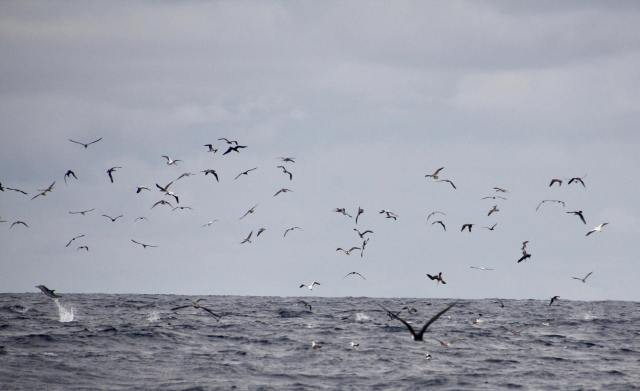
A feeding frenzy, spot the dolphin leaping!

IMG_6075-squashed

IMG_6081-squashed

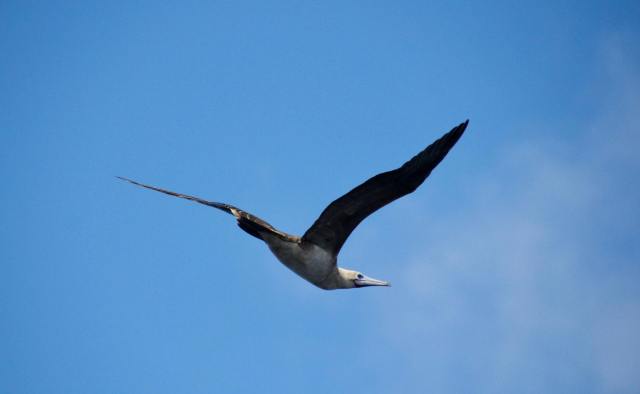
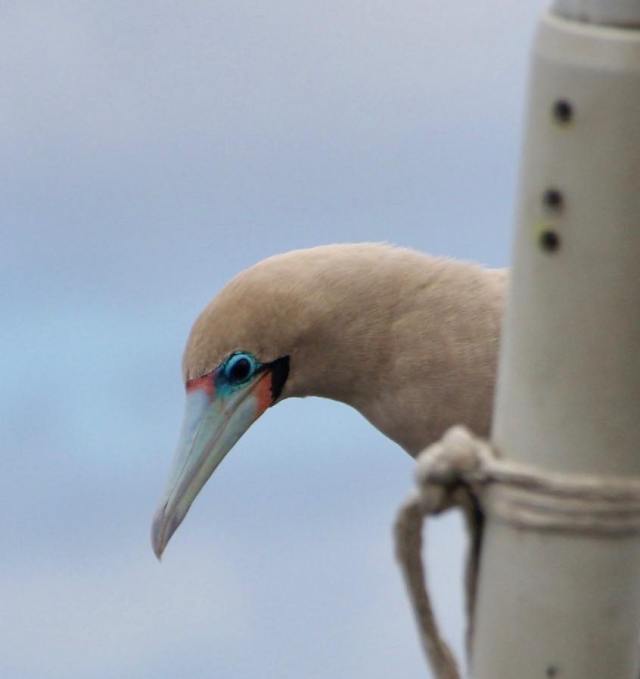
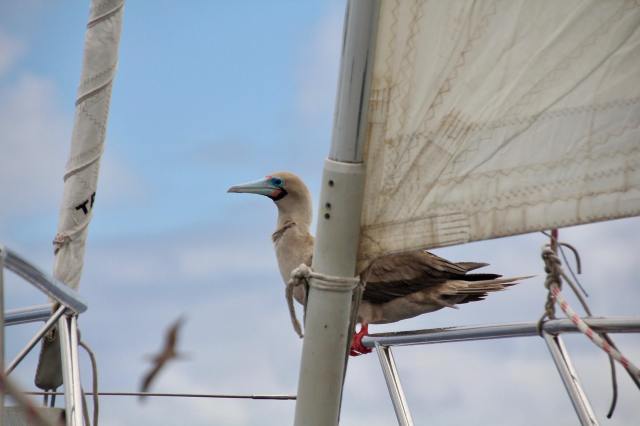
A beautiful Red-Footed Booby takes a welcome break from fishing

IMG_6107-squashedIMG_6113-squashed

IMG_6148-squashed

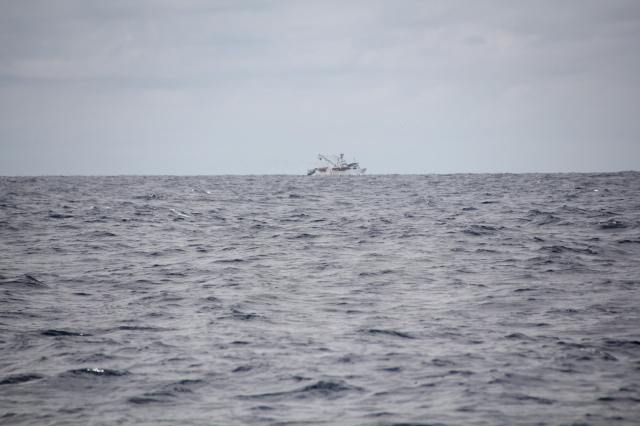
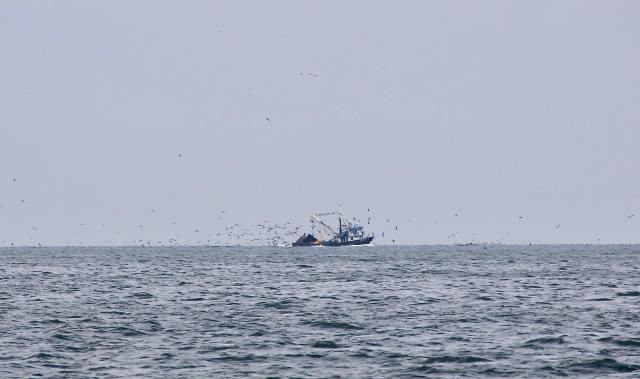
A fishing boat passes us north of Galapagos Islands, our last sighting of another boat

IMG_6158-squashed

IMG_6161-squashed

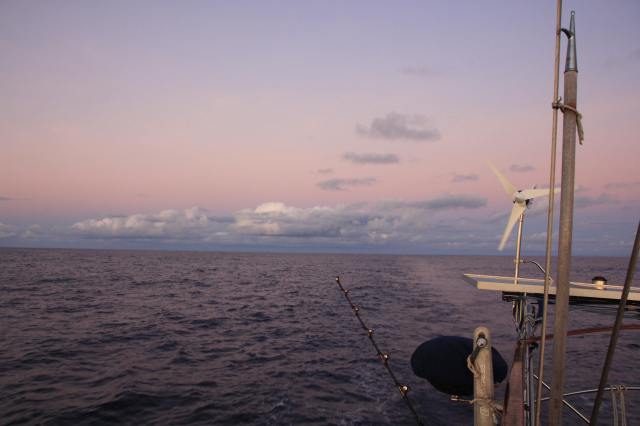
Spectacular sunsets

IMG_6167-squashedIMG_6171-squashedIMG_6200-squashedIMG_6210-squashed

Joy Sailing-squashed

IMG_6223-squashed

IMG_6232-squashedIMG_6239-squashedIMG_6241-squashedIMG_6248-squashed

IMG_6261-squashed

Maui just in sight as the sun goes down

IMG_6283-squashed

IMG_6289-squashed

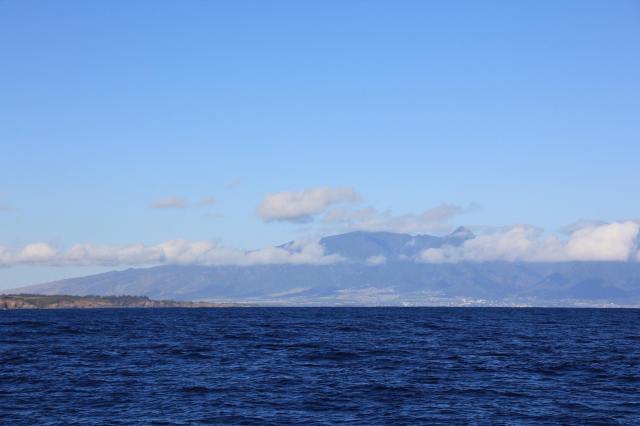
Maui’s dormant volcano, Haleakala (3,055m), looked beautiful in the early morning sun. We could see numerous waterfalls along this eastern coast.

IMG_6295-squashedIMG_6308-squashed

IMG_6309-squashed

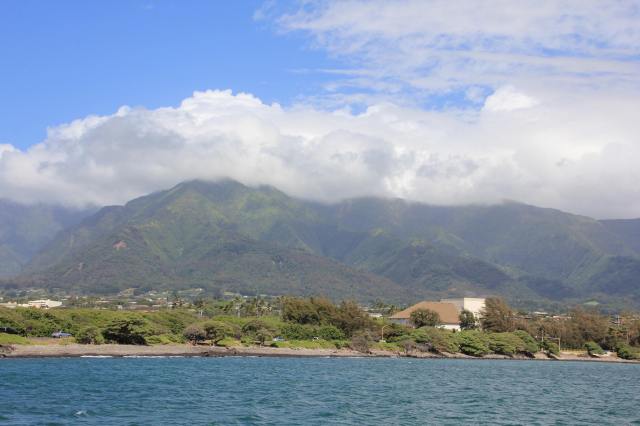
The mountains of West Maui make a beautiful back-drop to the town and harbour at Kahului


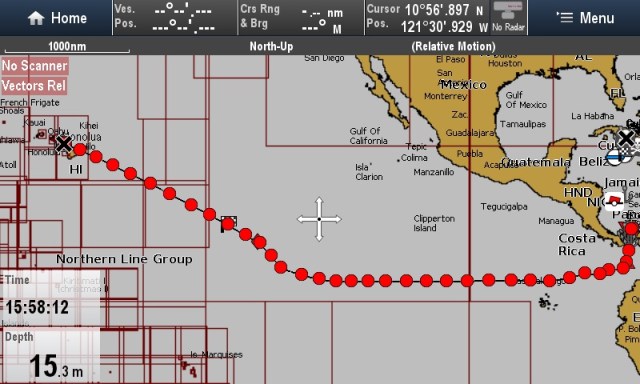
Joys Track Panama to Hawaii

Joy’s route Panama to Hawaii – 37 days and 5,141 nautical miles

Posted in Hawaii | Leave a comment

Isla Taboga (Panama) in Pictures

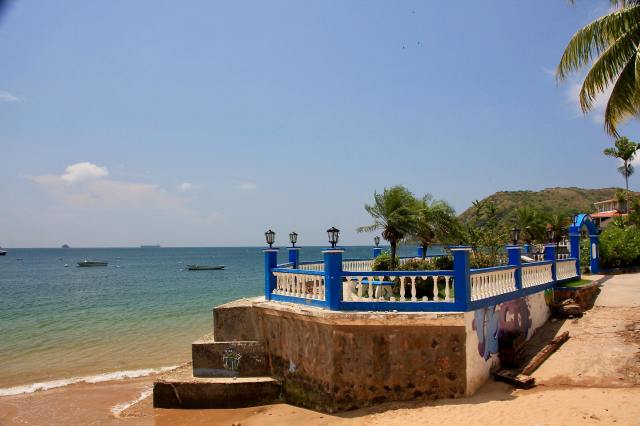
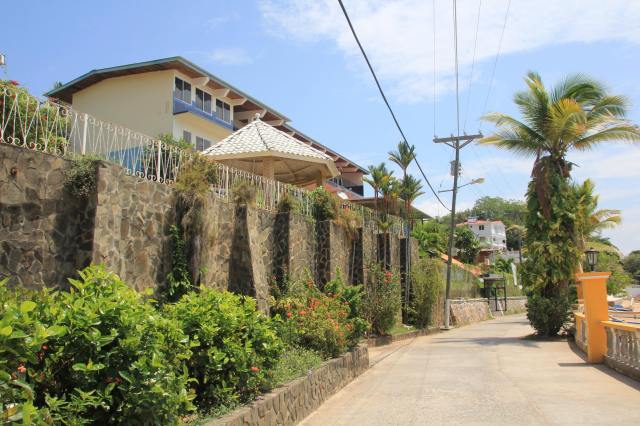
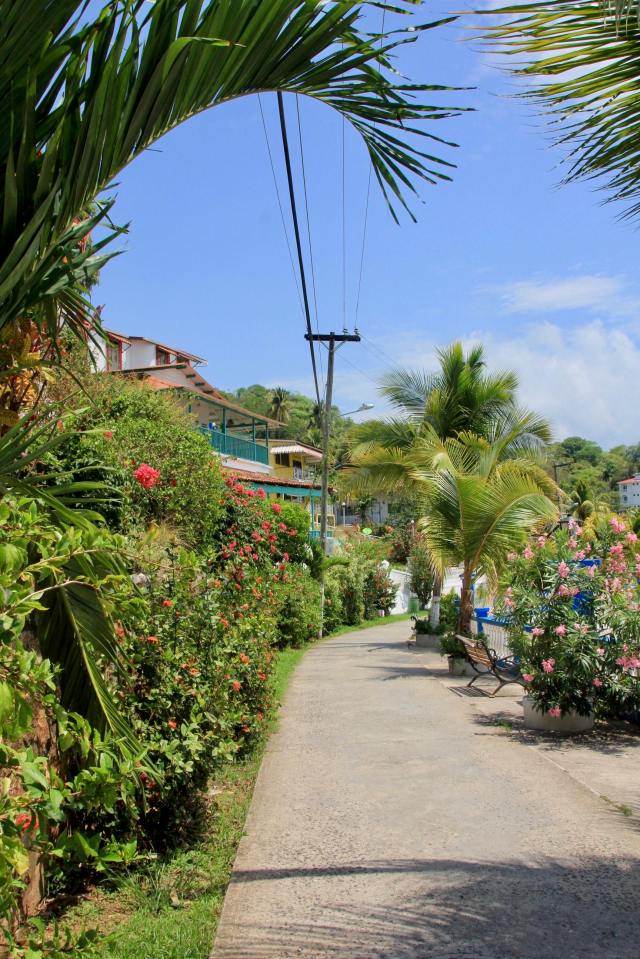
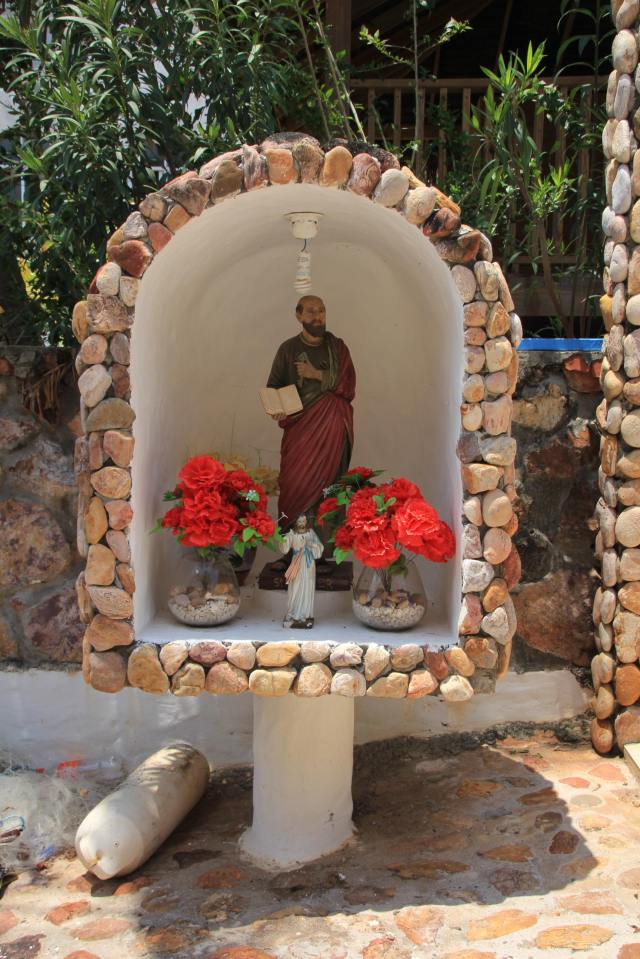
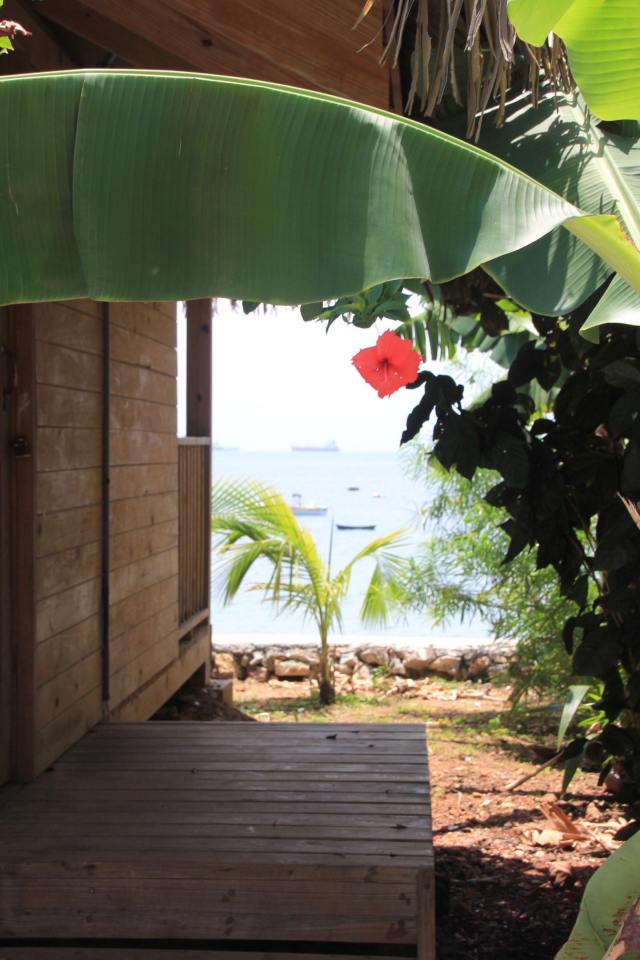
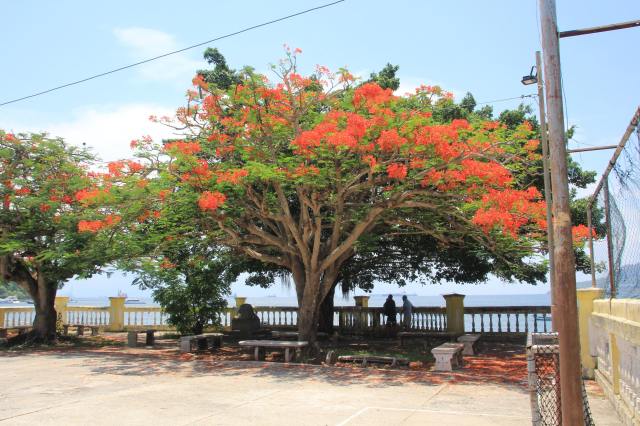
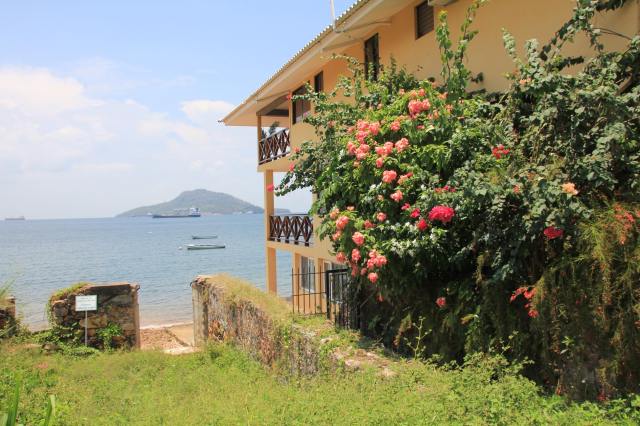
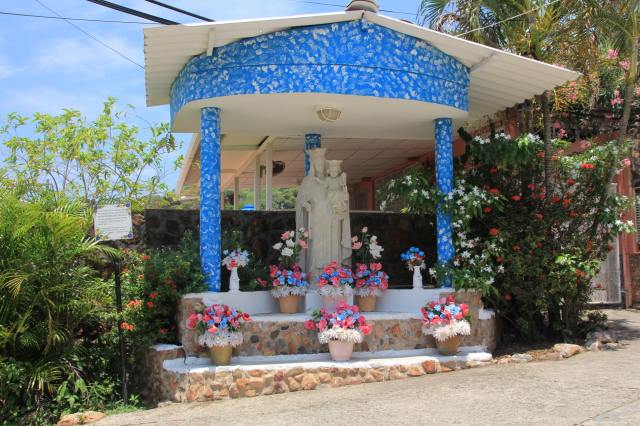
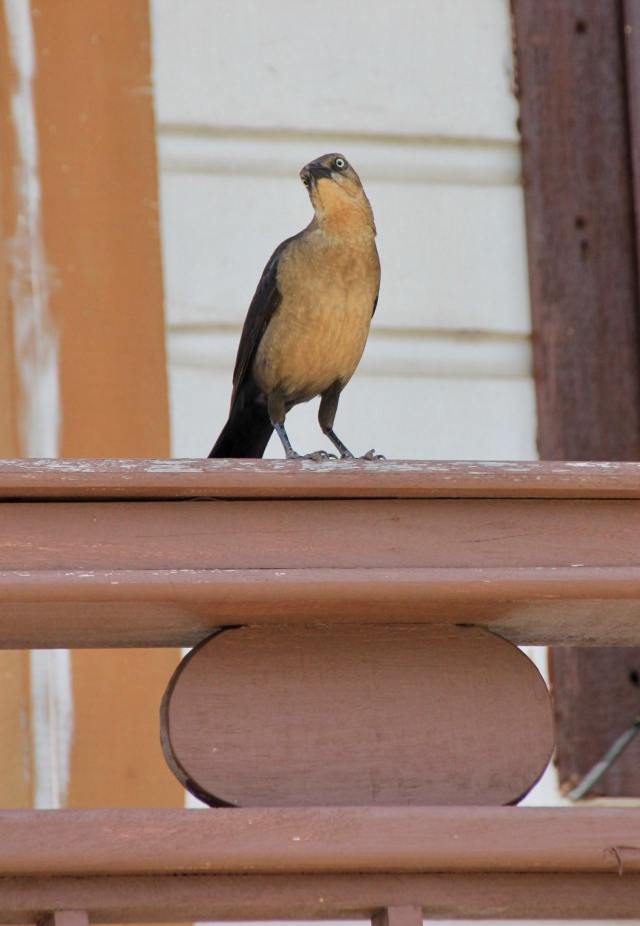
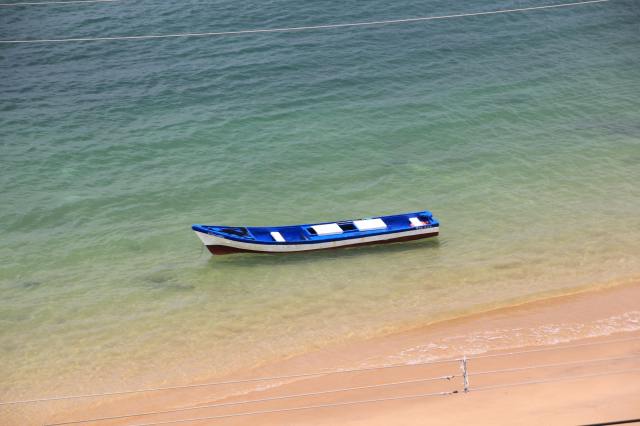
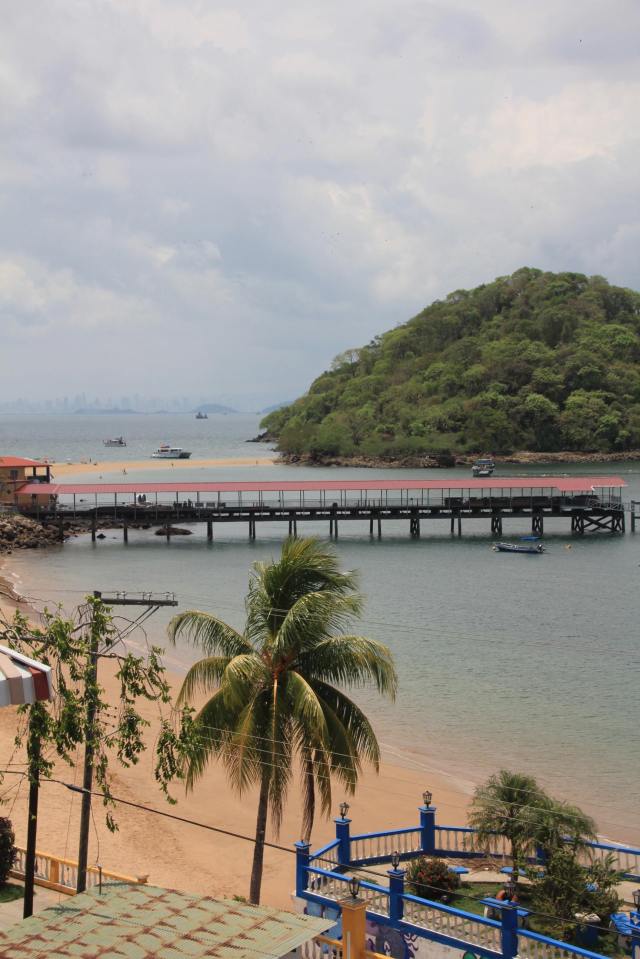
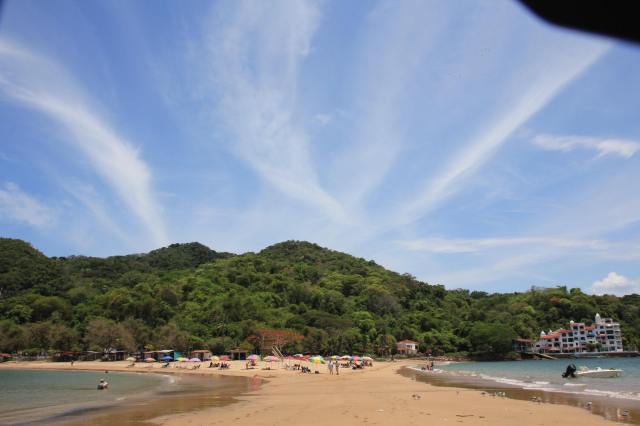
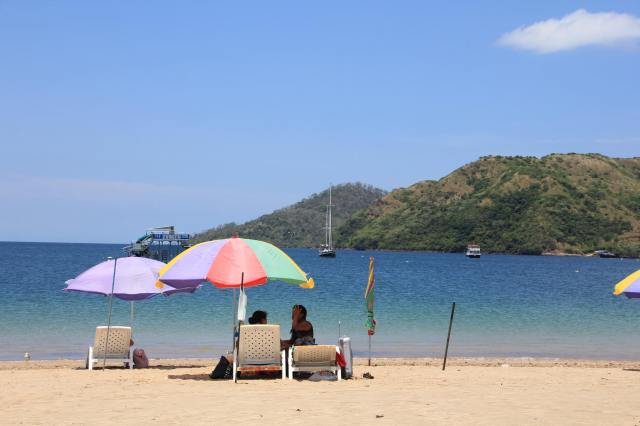
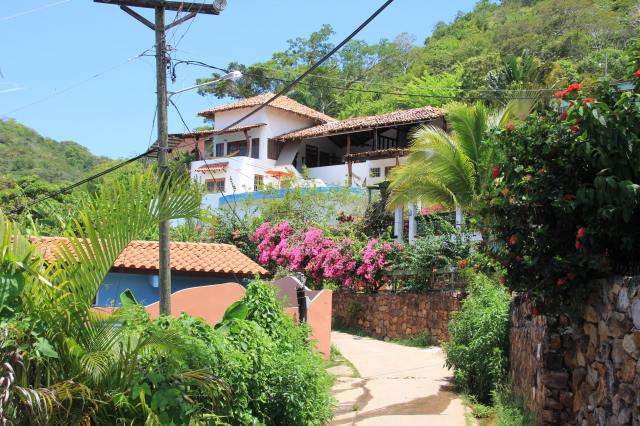
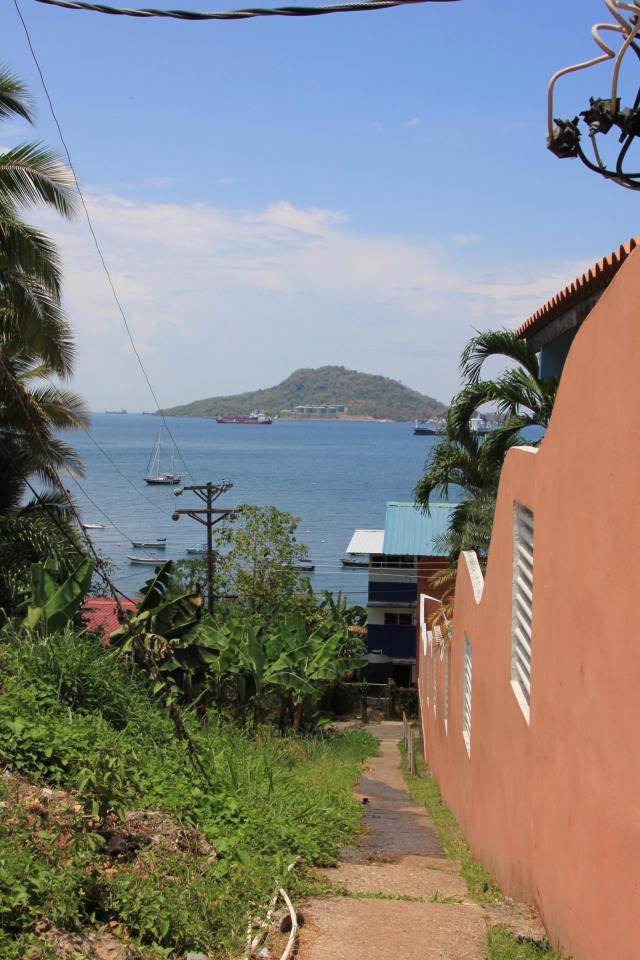
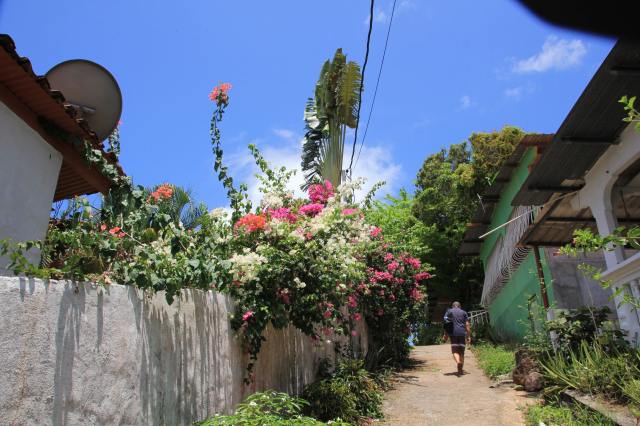
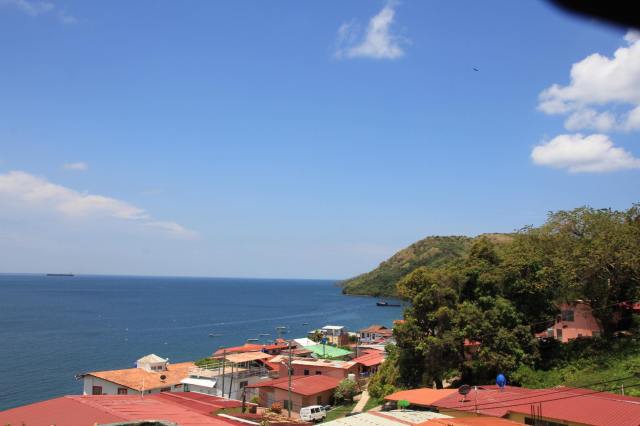
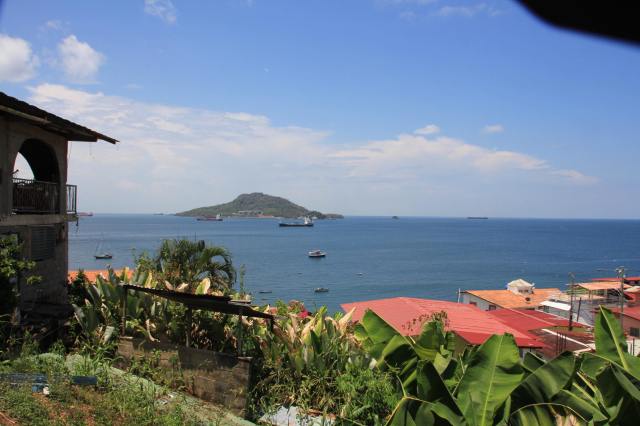
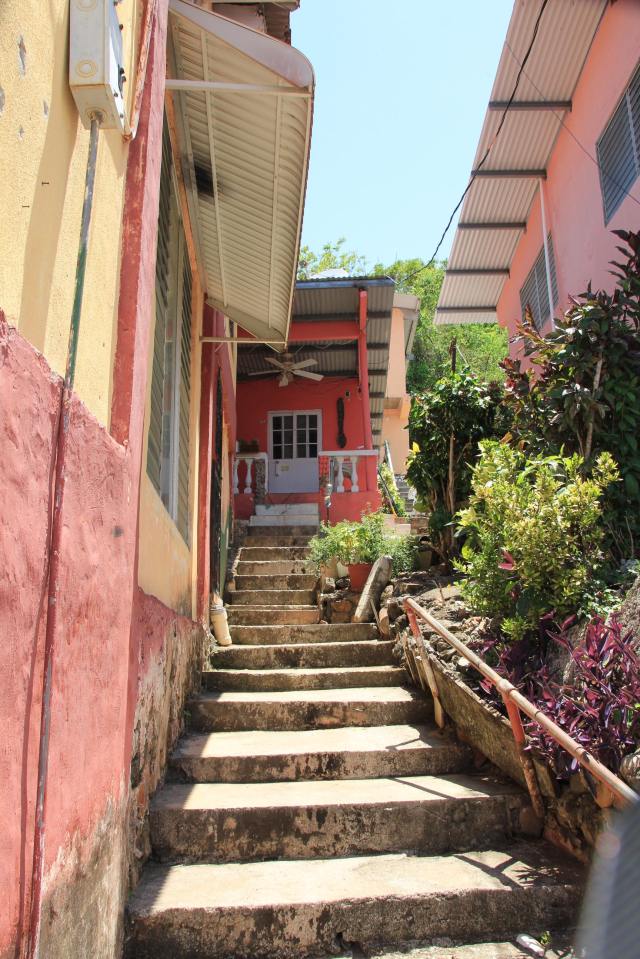
While we were Pacific side in Panama we spent a few glorious days on the small island of Taboga, here are some of my photos (better late than never!).

IMG_5683-squashedIMG_5686-squashedIMG_5687-squashedIMG_5692-squashedIMG_5696-squashedIMG_5698-squashedIMG_5706-squashedIMG_5707-squashedIMG_5709-squashedIMG_5710-squashedIMG_5713-squashedIMG_5714-squashedIMG_5715-squashedIMG_5720-squashedIMG_5722-squashed

IMG_5740-squashedIMG_5741-squashedIMG_5743-squashedIMG_5746-squashedIMG_5755-squashedIMG_5760-squashedIMG_5761-squashedIMG_5762-squashedIMG_5764-squashedIMG_5765-squashedIMG_5772-squashedIMG_5773-squashedIMG_5776-squashedIMG_5777-squashedIMG_5778-squashedIMG_5779-squashedIMG_5780-squashedIMG_5781-squashed

IMG_5784-squashed

Panama City still in view from the island

IMG_5785-squashedIMG_5787-squashedIMG_5789-squashedIMG_5793-squashedIMG_5794-squashedIMG_5801-squashedIMG_5802-squashedIMG_5806-squashedIMG_5808-squashedIMG_5813-squashedIMG_5818-squashedIMG_5819-squashedIMG_5821-squashedIMG_5822-squashedIMG_5823-squashedIMG_5824-squashedIMG_5825-squashedIMG_5826-squashedIMG_5827-squashedIMG_5829-squashed

Posted in Panama, Uncategorized | 1 Comment

Day 29 at sea – 4,035 miles

A walk around deck at first light reveals the treasures that Neptune has offered up during the night hours. For the first thousand or so miles we were given squid, silent visitors slipping in on a wave unnoticed. Then came the usual flying fish, launching themselves onboard in the darkness with a loud thwack against the cockpit enclosure followed by lots of thrashing. Thank God for the new enclosure which we shut on the windward side each night (we’ve become soft sailors) if the gate crashers end up on the aft deck they are easy to push off back to sea almost unharmed with the boat hook, if they land in the side deck then that’s their lot. They are impossible to get hold of to chuck over board as they thrash about shedding their slimey scales everywhere. We would have had half a dozen land not only in the cockpit but probably on our lap one night without the side panel closed. I brush the fish scales off the canvas most mornings.

Other than a wicked late evening encounter with a large pod of dolphins whizzing through the water lighting up like fluorescent torpedoes as they collide with phosphorescence in the water, sailing west underneath the ITCZ was pretty unremarkable. The sunsets and moon rises were spectacular though, must be an equator thing. When we reached 127° west it was time to start heading up closer to the ITCZ ready to cross it. For the first time since we have been watching its position which changes daily, there was an area of ‘moderate to strong convection’ 120 miles south and 90 miles north of 128°, just as we reached 128°, typical. The five days previous had shown this area to have slight convection and only a narrow passage across it, now quite the opposite, too late to change our minds though. So we encountered torrential rain for about 36 hours, periods of no wind which we motored through and then one enormous squall which lasted for hours but meant the sails could come out again and the engine off. For two soggy nights we had feathered friends take refuge, the first night was a small petrel who landed on the winch by the cockpit and nudged the plastic window looking a little peeved that we had shut him out. Good job we had the window shut, it wouldn’t have worked out well for either of us, we were just tucking in to mahi mahi and rice. He wobbled off the winch and went onto the foredeck looking rather bedraggled. The next night was a slightly bigger bird than the petrel, not as daring to try and get into the cockpit, he huddled on the foredeck right by the staysail sheeting track. Not a good place either as when the wind veered we had to roll it away, trying not to disturb him, then a squall about 3am meant a reef in the main and a change again in sail trim. Then a couple of hours later no wind with sails flogging, sails away and motor on, the steaming light giving away his position. The rain continued to bucket it down during all of this, and in a greater quantity than the spray hood and cockpit enclosure could cope with. It was one of those nights, and it wasn’t just the stowaway that didn’t get much sleep. The wind eventually settled from the NNE and the skies cleared early morning, we had come out the other side of the twilight, I mean convergence, zone and into the north east trades. Phew.

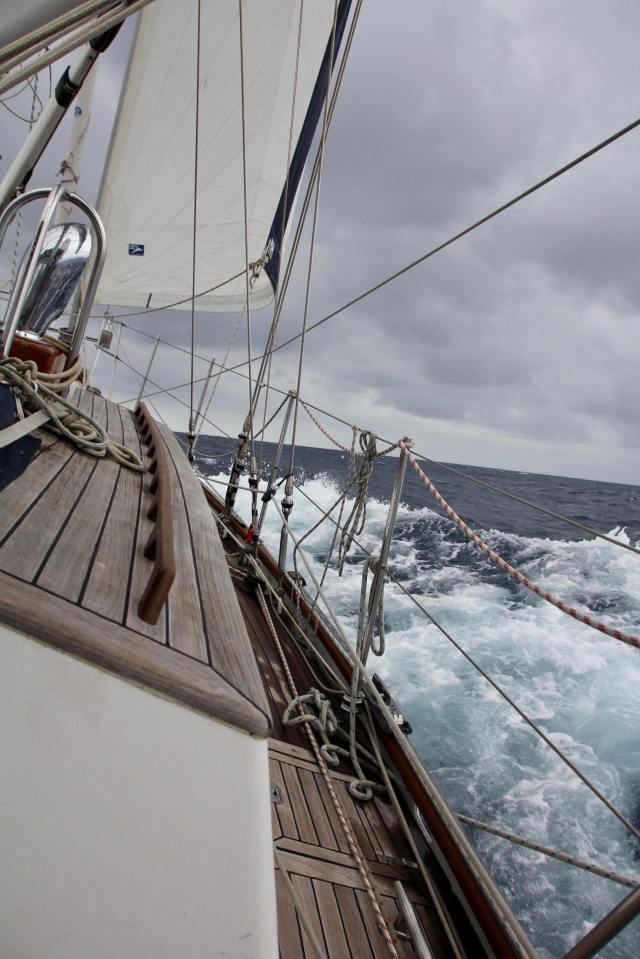
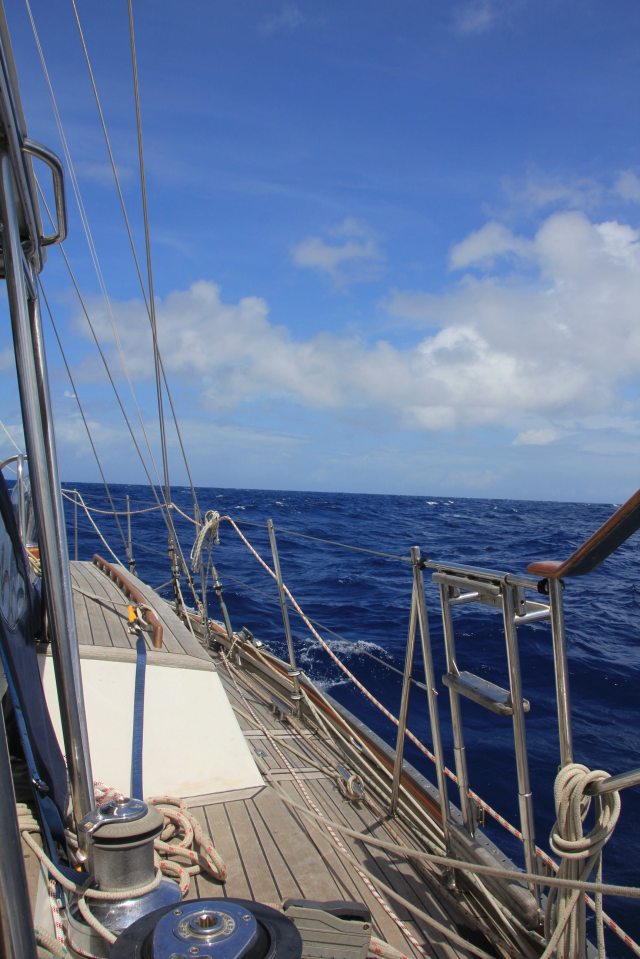
We have been keeping a close eye on the weather as always, in the last week two hurricanes, Aletta and Bud, have developed off of South America and there are numerous lows with gale force winds tracking relentlessly eastwards across the North Pacific. They shouldn’t directly affect us on this passage other than ‘mixed swell’ which we are experiencing now. That means it’s coming from more than one direction, not just the wind direction, making it feel at times like we are beating into a sea when we are on a broad reach. Not the most comfortable of seas, but with a steady 15-20 knots of wind we are back up to cracking off 170+ miles per day following a rhumb line to our stop over island of Maui…now only 1,000 miles away.

Only two things I would change right now, a larger selection of chocolate and perhaps a crossword book (I have almost been tempted to tuck into one of the sticker and colouring books I have in stock for the kids on the Pacific islands). My life would then be complete.

Posted in Uncategorized | 1 Comment

Day 16 at Sea, 2000+ nautical miles into the Pacific

After leaving the island chain of Las Perlas we bashed south westwards away from the Gulf of Panama in search of the south east trade winds. Of course we haven’t had the luxury of waiting for a suitable weather window as we are so late already embarking on this passage, so with south west winds 10-15 knots forecast we beat to windward and against a current running up to 1.5 knots at times. This made initial progress slow, tacking as and when the variable winds dictated and on a couple of occasions when they were so light we resorted to motor sailing just to make some westing. The reason for this route and not a direct one, is to follow the great circle route which takes advantage of the trade winds and currents.

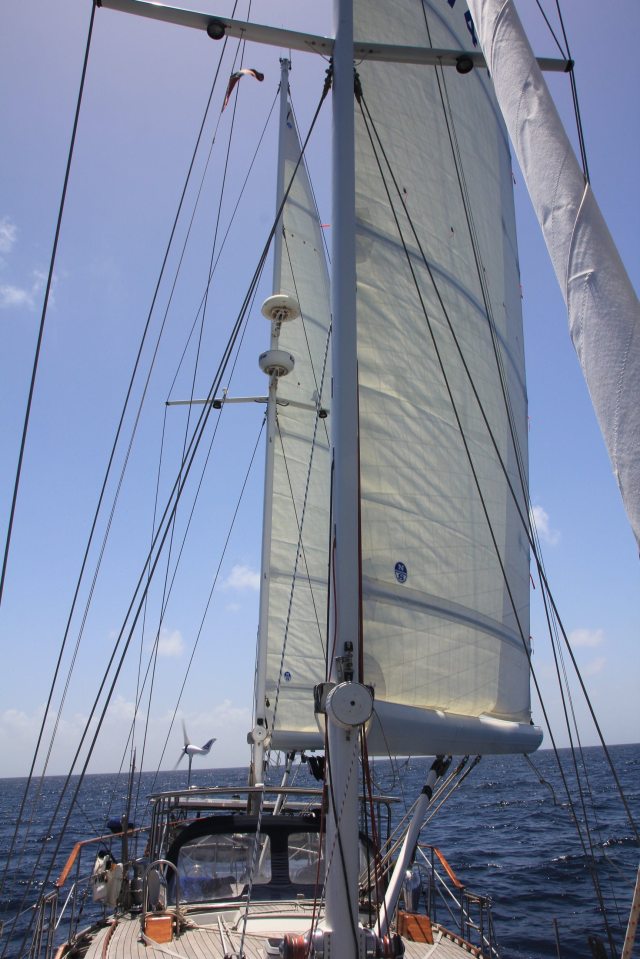
Early morning on day 7 at around 3° 51 North of the equator we finally found the south east trades, with squally conditions and a great 20+ knots from the SSE we reefed the main and eventually the jib sail to prevent waves from smashing the hell out of it and hunkered down for a surprisingly bumpy ride. Despite reducing sail Joy cracked on at a steady 8 knots on a reach loving her new powerful main sail. Although we have a few teething problems that we still need to sort out on all three new sails (main, mizzen and staysail), they have improved Joy’s sailing performance. Then late afternoon on day 8 just as we dropped below 3° N our contrary current changed and we found the sweet spot with a favourable current adding up to 1.2 knots to our already cracking boat speed.

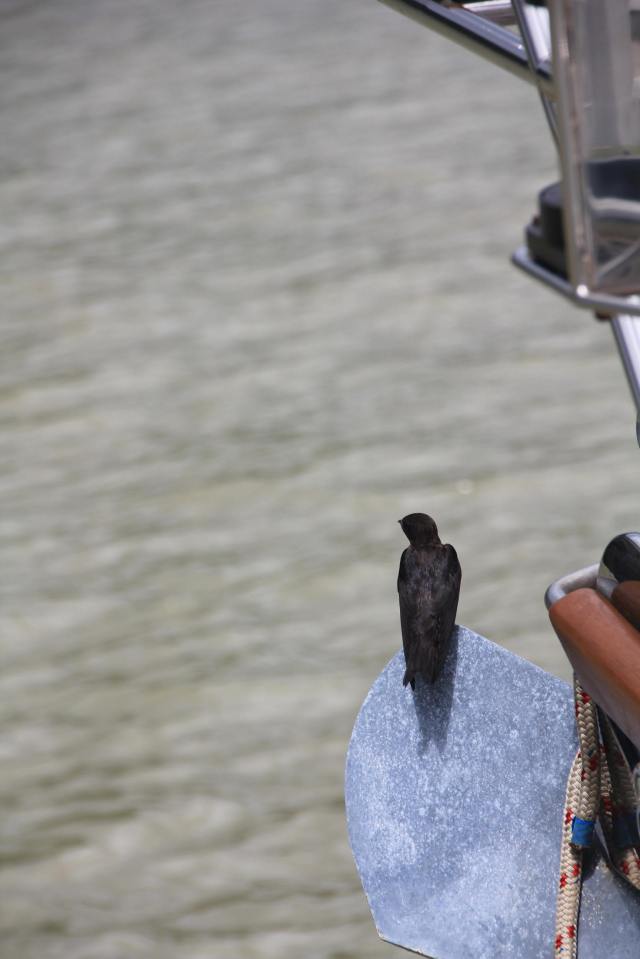
Sailing 130 miles north of the Galápagos Islands we steamed westwards and started encountering some entertaining bird life. Boobies of all variations followed us religiously, using Joy not only as a fishing aid catching flying fish that leap out of the water as Joy approached, but also as a roosting perch overnight and sometimes during the day. One night we had a family of three sleepover, two on the bow and one on top of the main mast. It was a choppy sea and quite amusing watching them struggle to balance in the moonlight as they settled down for the night. At first light the next day the two on the bow took off for a reconnaissance flight, one returning to hassle sleepy head on top of the mast who clearly felt he hadn’t had such a restful night. Needless to say the deck, coach roof and solar panels have been somewhat decorated with fishy grey paste, these buggers pooh a lot. I took some photos of a beautiful red-footed booby on the bow one morning preening his feathers, he had an ‘egg-shell’ blue bill with orangey-red and black stripes on the base. A stunningly handsome bird with vivid red webbed feet. We have also seen many small Petrels which resemble swallows, black with a distinctive white stripe at the base of the tail, they flit and swoop on the surface of the water apparently picking up small fish scraps and jelly fish.

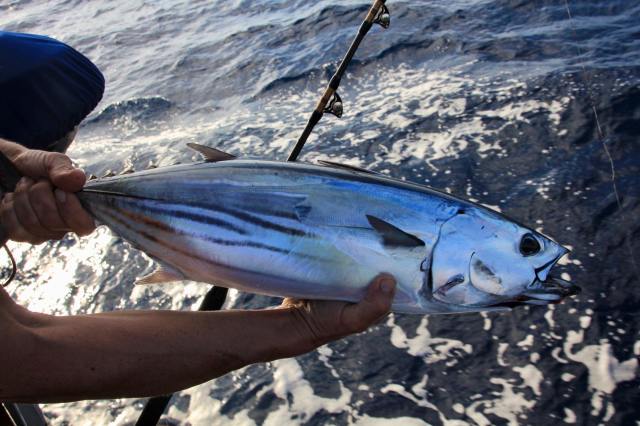
Life on board Joy for Jez and I continues as normal except our night watch pattern from 9pm to 9am gives us just two bursts of 3 hours sleep, less if sail changes or reefing is required during the night. I have made yoghurt, granola and ginger beer and Head Chef continues to knock up some pretty awesome evening meals as well as homemade bread rolls and mayonnaise. Our fresh produce is lasting well, so no danger of developing rickets just yet. However I have made a serious dent in my kilo jar of mini snickers so rationing may be on the cards soon. The rod has been providing some tasty fish too, a couple of small tuna-type fish and a couple of mahi mahi have topped up stocks so fish has been on the menu quite a bit.

Adding to the excitement of sailing a lump of heavy steel through the water at 8-9 knots at times on a reach in reasonably settled weather has been the sighting of a search and rescue helicopter, he popped up on AIS doing 95 knots early one morning seemingly following a search pattern relating to wind and current. It took a few hours for him to come into view beneath the thick cloud cover, he didn’t make radio contact just pushed on searching. We kept a sharp lookout just incase, having only seen three or four large fishing boats in the waters for some time now. Maybe it was just a training exercise.

For a few days we had an annoying swell on the aft quarter, giving a motion akin to being in a washing machine on the anti-crease cycle. Unpredictable and tiring, we are glad of the many new handholds we have created in the new cockpit enclosure. The last two days have improved somewhat and we have had enough sunshine to top up our batteries after cleaning the bird pooh and salt spray off the solar panels. Last evening brought the most fantastic rising moon I have ever seen, a huge orange fireball rising above the horizon. As it gained height over the horizon the strips of dark clouds in front played tricks, at first giving it a bandana and smiley face, then a moustache and neck tie. Jez wanted ‘some of what I had just had’ but apart from a very good batch of ginger beer I put it down to a healthy dose of ’16 days at sea’ imagination.

So over 2,000 miles covered as the booby flies from Panama, we have around another 900 before we head across the ITCZ and pick up the north east trade winds which will take us to a Hawaiian landfall some 2000 miles after that. Good job we get on so well together!

Posted in Uncategorized | Leave a comment

Taking the Plunge into the Pacific

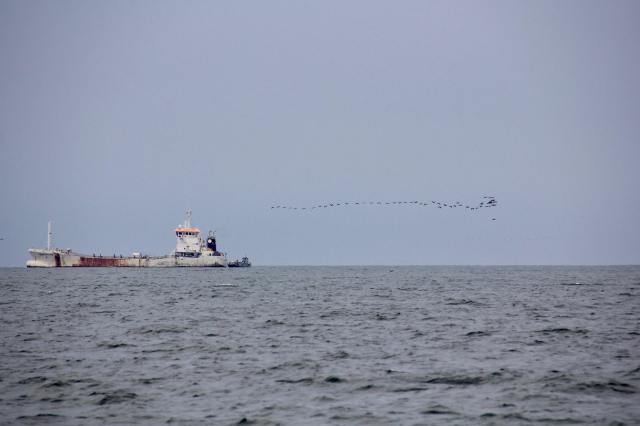
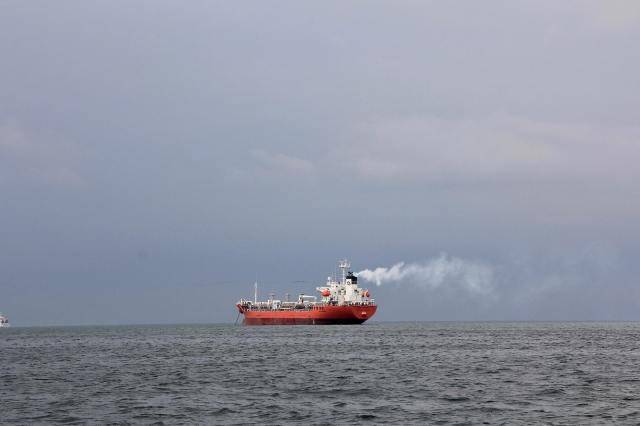
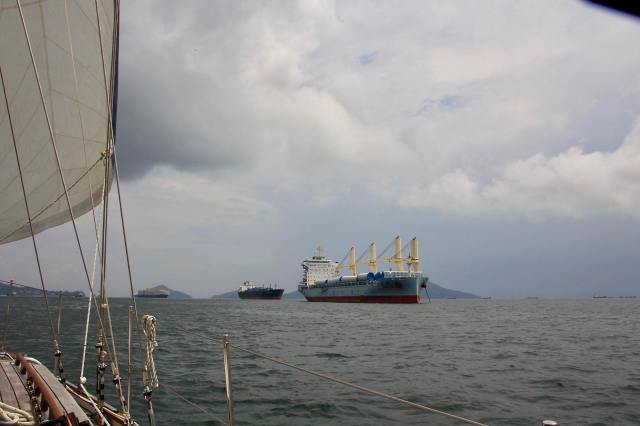
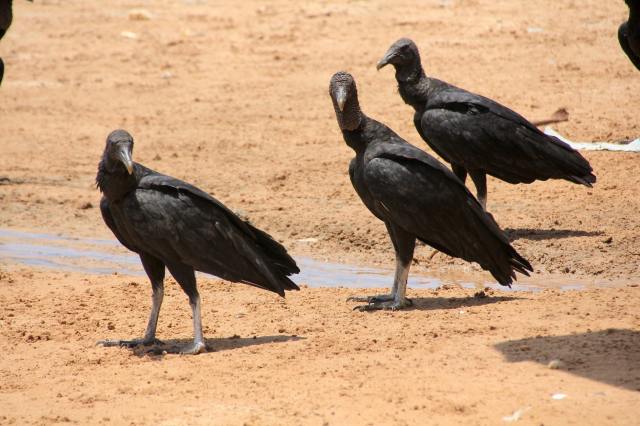
After the tiring but excellent canal transit we spent a very rolly night on a mooring ball (actually it was an old car tyre) at the Balboa yacht club for the handsome price of US$41 with a free launch which came out to collect us and take us ashore to pay the bill. Nice touch. With yet more black clouds billowing over Panama City we set sail with Jez’s parents and headed out of the channel to a small island in sight called Taboga just 7 miles away. Leaving the black clouds behind us we sailed through the big ship anchorage zone marvelling at the size of some of the vessels waiting their turn to transit. Large flocks of birds flew across the sky like trailing ribbons, hundreds in fact all in unison mimicking the bird in front, a constant stream flying high in one direction and low to the sea in the other. Like a two-way bird highway. As they got closer we could see they were made up of Pelicans and cormorants. Where were they heading and where had they come from? Who knows, but it seemed to be rush hour. Taboga is a little piece of paradise on the other side of the big ship anchorage, a small spit off the NE corner of the island provides a little bit of protection at anchor from a north wind although the many empty moorings there limit anchoring space so we put out both bow anchors to reduce the radius of our swing. The island is nicknamed the island of flowers for a very good reason. The quirky streets, only just wide enough for the odd golf cart and possibly the only truck on the island, are lined with beautiful flowering shrubs which attract butterfly’s and hummingbirds. The heady scent of jasmine filled the air as we walked up to the church. Jane and I were in our element wandering the rabbit warren of paths pointing out our discoveries and photographing anything that moved, and of course that didn’t. Part of the pretty beach had a large congregation of turkey vultures all irritating each other like a gathering of grumpy old men. The place was very quiet mid week, a choice of good restaurants provided some very tasty lunches after a bit of excercise in the hot sun. It didn’t rain at all while we were there, the island just managed to escape the systems that built up in the afternoon and rolled over Panama City, the only problem was that it changed our wind direction for an hour or two and Joy had great fun twisting our two anchor chains up. When the wind died Jez and his mum jumped in the dinghy and pushed Joy back around 360° to untangle her. It was a good choice to come here for Geoff and Janes last few days in Panama for some sunshine at last and some swimming. Relaxation time over we sailed back to the hustle and bustle of Panama in time to catch the afternoon rain. We anchored off the causeway which is a long stretch of land connecting La Flamenco island with the main land, and home to many anchored boats including work boats and old barges. The stench of diesel fumes filled the air and the chop created on the water by the wind racing across the bay made it a very unattractive anchorage. This however was the best place to get ashore as there is a public dock also used by the ferries, but dinghys can be left safely here tucked around the back of the floating dock. We had used the services of a great local guy called Rogelio the week before, he brought Jez’s parents from the airport and had also provided our lines and tyres for the canal. Early Friday morning he collected Geoff and Jane once again and we tagged along to the airport so that we could top up provisions afterwards for the next leg of our journey. Rogelio took us to the city’s fruit and veg market, a huge daily market with a choice that blew us away. We stocked up with loads of fresh produce, lush green salad leaves made a welcome change from boring iceberg and the pineapples here are deliciously sweet and juicy. Rogelio has a membership card for the bulk buy Price Smart supermarket so a stop there for just a few bits ended up filling up his large car, it’s difficult to know when to stop when stocking up for a few months at sea. He also took us to the port authority and immigration offices to clear out of Panama and get our zarpe for the next port. Rogelio had been recommended to us by some cruisers we met in Shelter Bay, he was a great contact to have and saved us a lot of time and money.

After a few last minute internet jobs to get our affairs in order ready for a few weeks without surfing – well, not of the web kind anyway – we topped up with diesel at Flamenco marina, deflated the dinghy and packed it away in an aft lazarette along with the outboard motor. Then set sail out of Panama accompanied by a pretty intense lightening display. As night fell we were literally surrounded by it, streaks hitting the water and lighting up the dark rain clouds in front of it. The ‘oohs’ and ‘aahs’ soon turned to ‘aagghhs’ as we dodged the hits, then during the night we actually tacked and turned back to avoid the continuous strikes directly in our path and way too close for comfort. We sailed back towards Taboga for three hours before we felt happy it was clear to tack back, but only for a couple hours when it started again. We then took our chances, fed up the torrential rain and seemingly lack of clear patches without lightening. As it cracked overhead on my shift it felt as though it was frying my brain (OK, I know it’s probably already fried, well perhaps more ‘sauted’). I still wonder how we ever got through it unscathed. The chain of Las Perlas islands came into view in the early morning light, visibility was poor due to continuing rain, and I discovered my poor Aloe Vera plant was up to its neck in the wet stuff…again. We chose an anchorage at Isla Pedro Gonzalez to get a few jobs done and dry off, luckily it was very well protected from the southerly swell but as evening fell we had a plague of flying weevil type bugs swarm around the boat, coming in to land on the deck then shedding their wings and mating. After swatting a few of the early arrivals I realised we were overwhelmed with them and we shut ourselves in. Then we discovered that a few hundred of now wingless randy weevils had squeezed through the mosquito nets in the dorade vents of the aft cabin and were now all over the bed, in cupboards, lights, clothing, hats, boxes etc. We were on a killing spree for the next two hours with spray and swats, just when we thought we were clear I would lift a pillow or piece of clothing and another would scurry out. The ‘lesser of two weevils’ joke was well and truly worn out and we went to bed exhausted. Awaking in the morning the out going tide had brought out a fair amount of rubbish and debris from the shore, not tempting enough for a swim to knock some pesky barnacles off the prop so we headed to the next island south in search of clearer water, avoiding a floating chest freezer on our way out of the anchorage. We found clearer water and dropped the hook so Jez could clean the prop whilst I did some laundry, repotted my poor Aloe and got ourselves straight for the long journey ahead.

Sailing away from the islands late afternoon we were joined by a large group of dolphins, the larger ones rode the bow wave as the younger ones jumped out all around us. With a beautiful sunset followed by a little more lightening we contemplated the few thousand miles ahead of us as we toasted the last sight of land for a few weeks with a beer and popcorn.

We will add photos to the blog as soon as we arrive back in civilisation in a few weeks!

Posted in Uncategorized | Leave a comment

Transiting the Panama Canal

It was a very early start on Sunday morning, up at 2am sharp to prepare to leave Shelter Bay Marina having collected our two new crew members, Karolin and Patrick, the night before and enjoying our last evening meal in the Caribbean at the marina.  With 8 tyres wrapped in plastic as additional fenders and four 125 metre lines on board for the locks, we all huddled in the shelter of the cockpit as the heavens opened on cue and torrential tropical rain bounced off the deck.  We had to be at ‘The Flats’ anchorage at the entrance of Gatun locks by 4am to receive on board our Advisor for the transit.  We arrived in good time (which is unusual for us!) and shortly after dropping the anchor a pilot boat came alongside to deliver our adviser for the day.  The poor guy almost got thrown in the deep as the pilot boat slammed in reverse for no apparent reason just as he was about to jump. A second attempt was more successful and we welcomed Roy on board. All yachts transiting the canal have to have an advisor on board, he directs the skipper through the whole transit and we felt so lucky to have been allocated Roy as he was not only a very knowledgable guy who filled us with confidence but great fun and a real pleasure to have on board.
IMG_5505-squashed

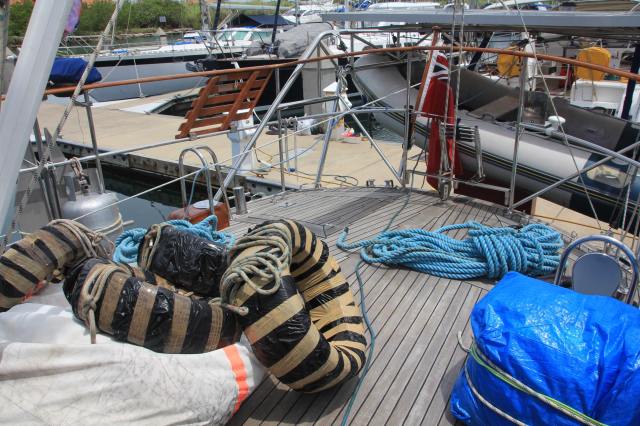
Lines and tyres delivered ready for the locks
IMG_5507-squashed

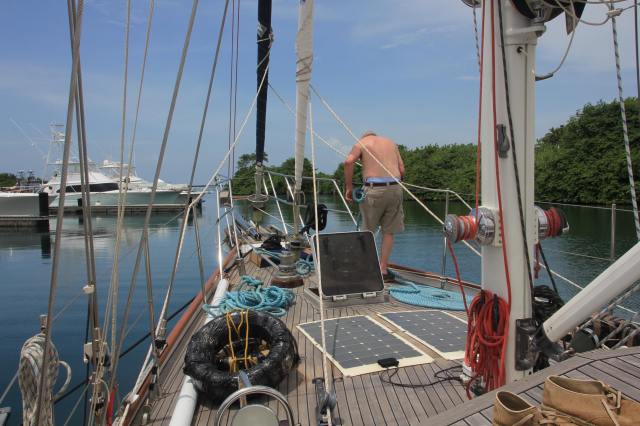
Geoff preparing the lines in the midday sun

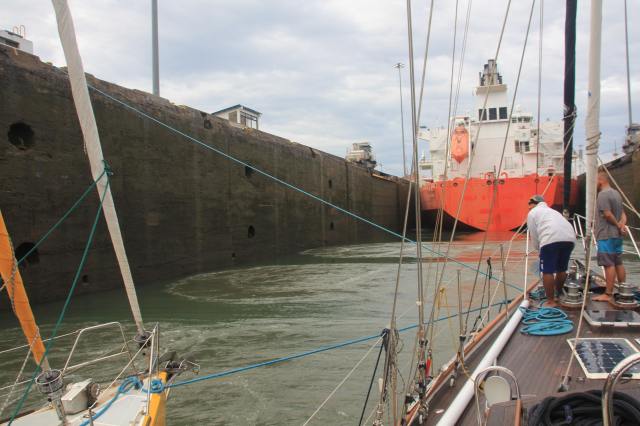
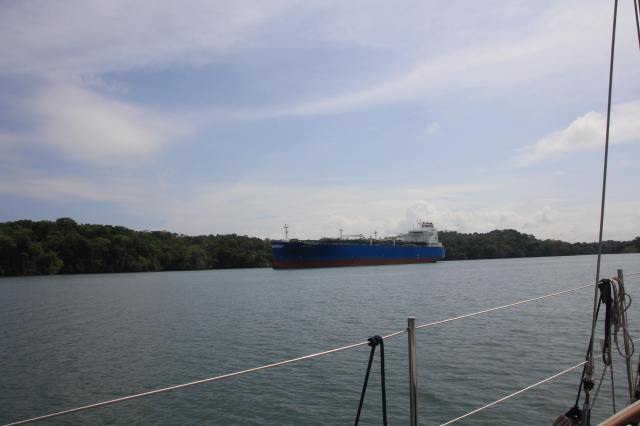
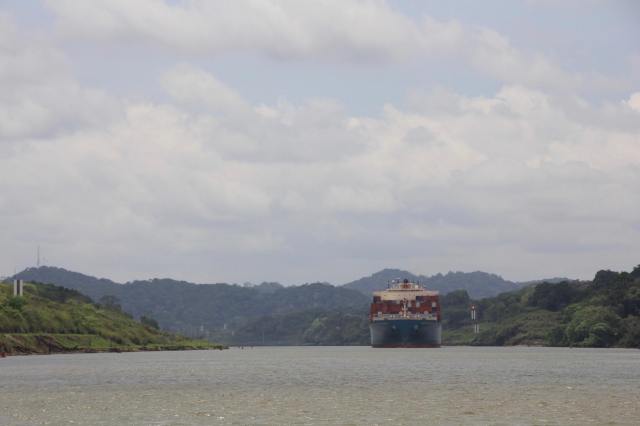
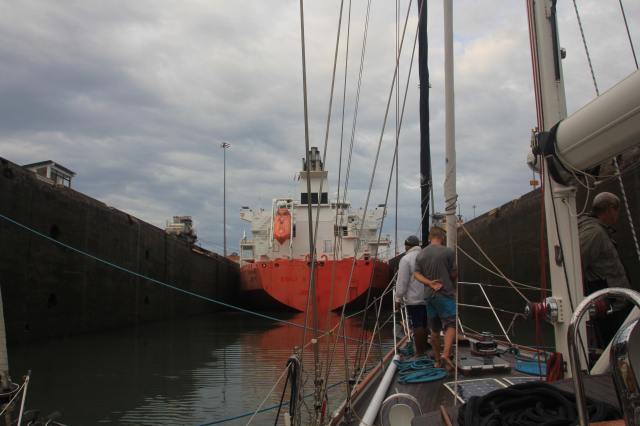
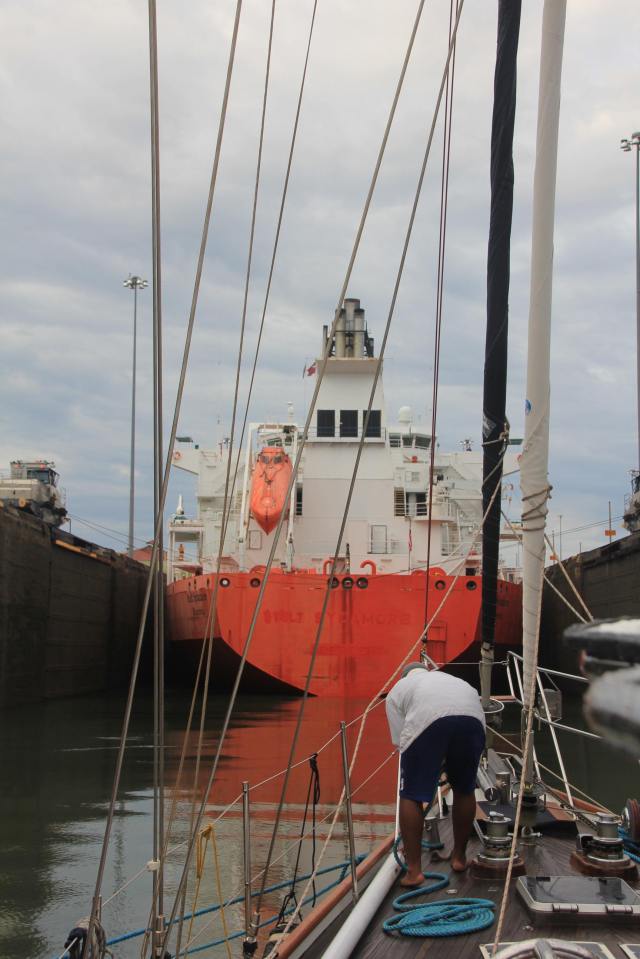
There were two other yachts waiting in The Flats so our transit would be nested, three boats rafted together going through the locks ‘as one’, but an argument between advisors began over who should be the centre boat.  One of the other boats wanted to be centre, quite a stupid thought as the centre boat controls all three, we were three times heavier than the other boat and a bit longer.  Roy pulled rank and won the day and the most sensible option was confirmed, we would be centre of the nest but would take a bow line to the lock instead of the little yellow boat to our port side as their cleats would have struggled to hold us.  As light filled the sky the rain stopped and we motored to the entrance of the canal behind the large tanker that would also share our lock, and rafted up with the other two boats.  Roy directed all three, giving instructions to all skippers as to turning the wheel and speed etc and we entered the lock with no problems at all.
IMG_5508-squashedIMG_5511-squashed

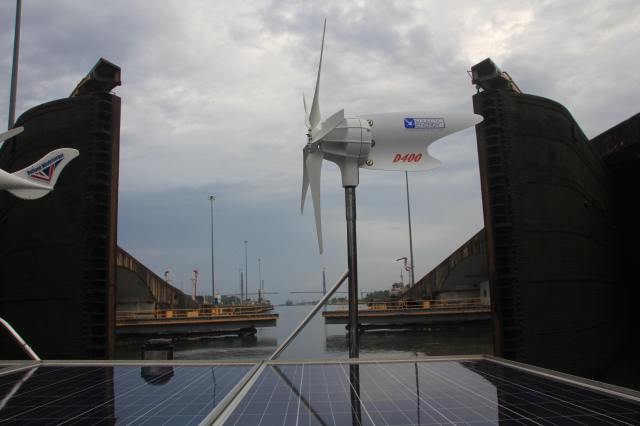
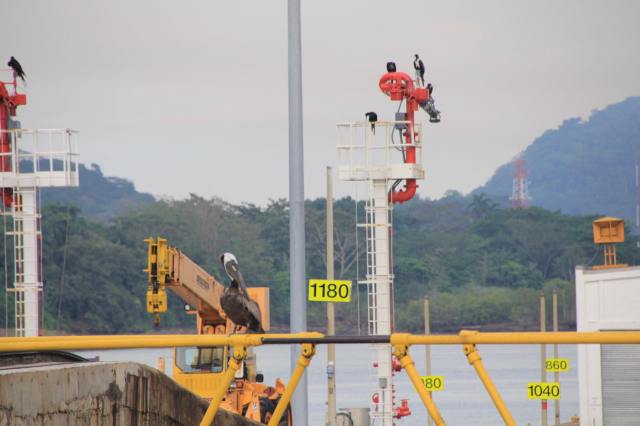
Once inside the locks thin lines with ‘monkey fist’ knots on the end are accurately thrown down to the two outer boats from the lock walls, these are attached to long lines on the bow and stern of the outer boats usually and fed back up to the bollards on the walls, we had just one of these lines on our port bow so the locks would be easy for us with just one line to control instead of four.    As the gates shut behind us I said a final goodbye to the Caribbean and watched the water swirling around beneath us as the locks flooded, we were to go up a ladder of three locks in this way all nested together until we entered the Gatun Lake at the top where we separated and made our way across the lake.

IMG_5512-squashed

Our bow line gets taken up to the top of the lock wall with the little yellow boat tied to our port side
IMG_5516-squashedIMG_5514-squashed

IMG_5518-squashed

Goodbye Caribbean!

IMG_5519-squashed

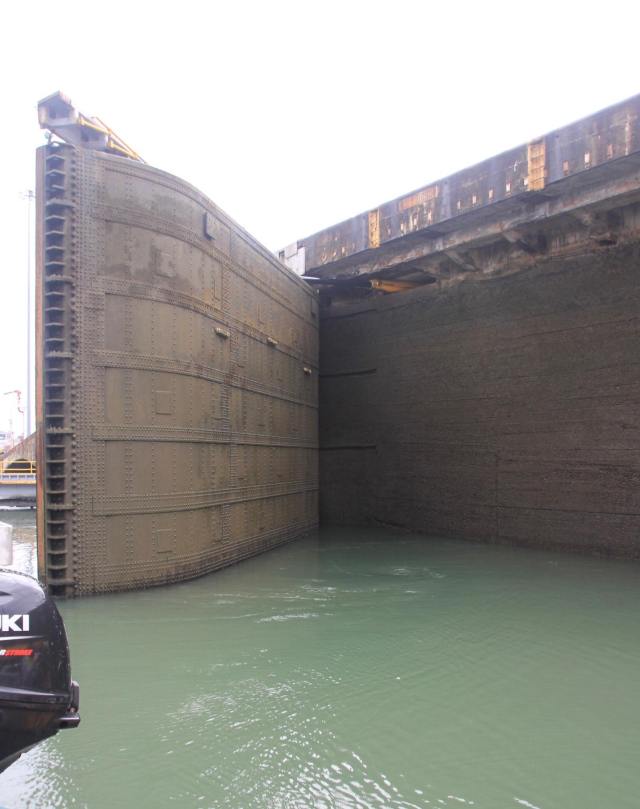
Gatun Lock gates shut behind us

IMG_5522-squashed

Water swirling in the lock as its flooded
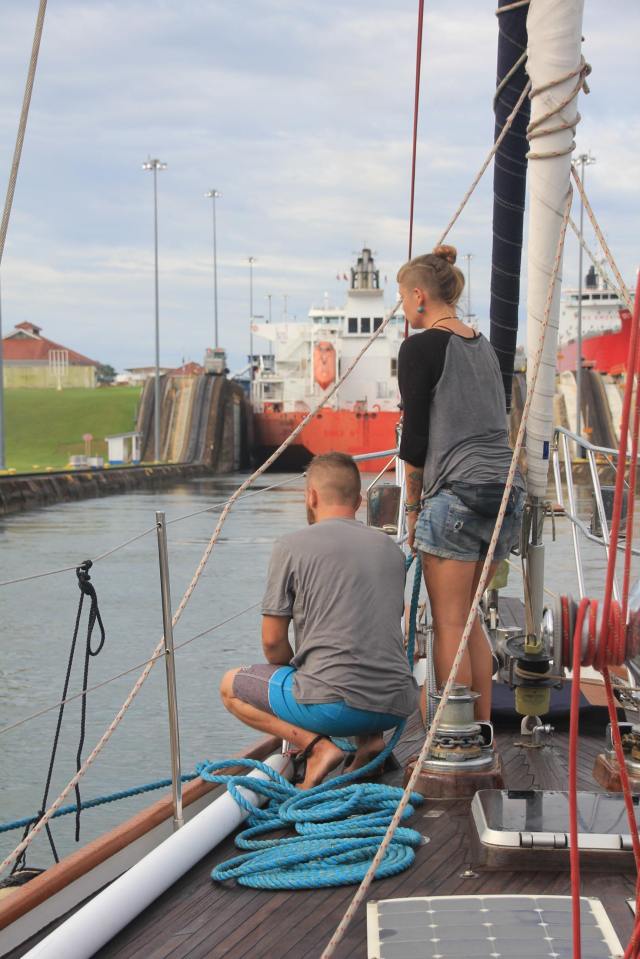
IMG_5529-squashed

Top Crew – Patrick and Karolin handle the lock line as we reach the top
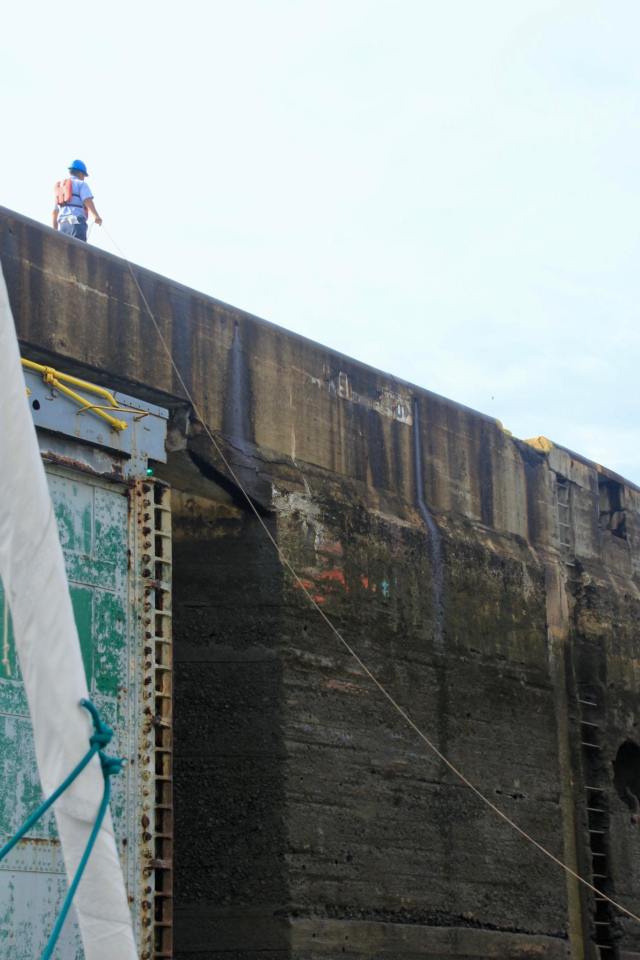
IMG_5532-squashed

Onward into lock 2 of 3 at Gatun

IMG_5537-squashed

Another large ship enters the first chamber behind us
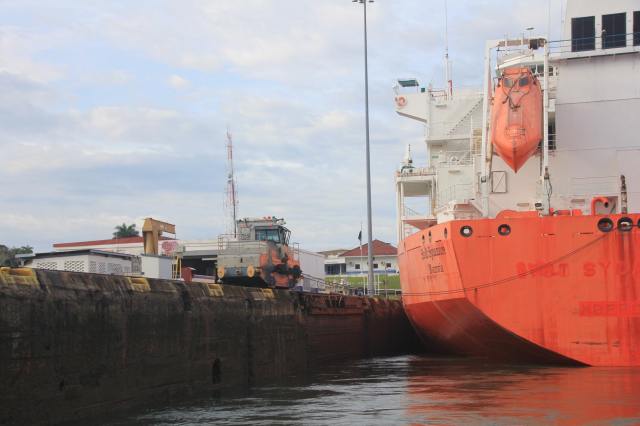
IMG_5535-squashed

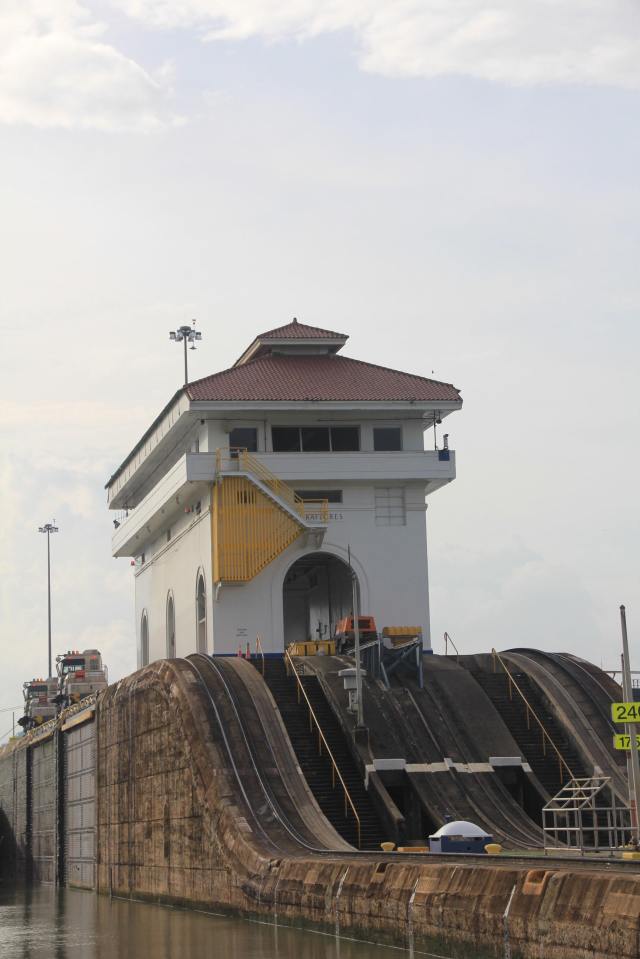
The large ships have their lines controlled by electric locomotives which run along the lock walls

Each lock chamber is 110 x 1000 feet and were built in pairs to handle two-way traffic. Construction started in 1909 and took four years to build, with no pumps to move water just gravity alone, all three Gatun chambers raise the boat a total of 85 feet into Gatun Lake.

Water is admitted or released through giant tunnels, or culverts, eighteen feet in diameter, running lengthwise within the center and side walls of the locks.  Branching off at right angles to these culverts, smaller culverts run laterally under the floor of each lock chamber, 20 to each chamber.  Each cross culvert has five openings for a total of 100 holes in each chamber for the water to enter or drain, depending on which valves are opened or closed.  This large number of holes distributes the water evenly over the full floor area to control turbulence.

To fill a lock, the main valves at the lower end of the chamber are closed, while those at the upper end are opened.  The water pours from the lake through the large culverts into the cross culverts and up through the holes in the chamber floor.   The water movement also generates power to operate the electric motors that open and close the lock gates which swing like double doors.
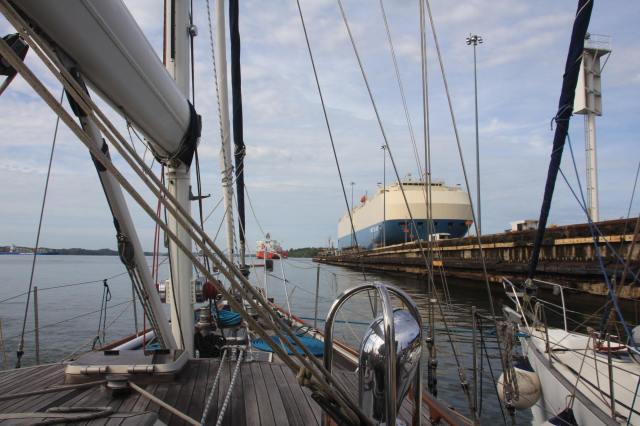
IMG_5540-squashed

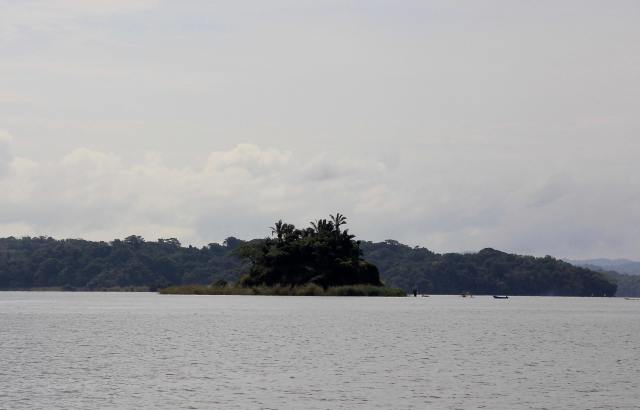
Entering Gatun Lake we got ready to untie from the other boats
IMG_5541-squashedIMG_5543-squashedIMG_5544-squashedIMG_5546-squashedIMG_5551-squashedIMG_5552-squashedIMG_5553-squashedIMG_5561-squashedIMG_5565-squashedIMG_5566-squashed

IMG_5596-squashed

Catching a lift on the anchor
IMG_5504-squashed

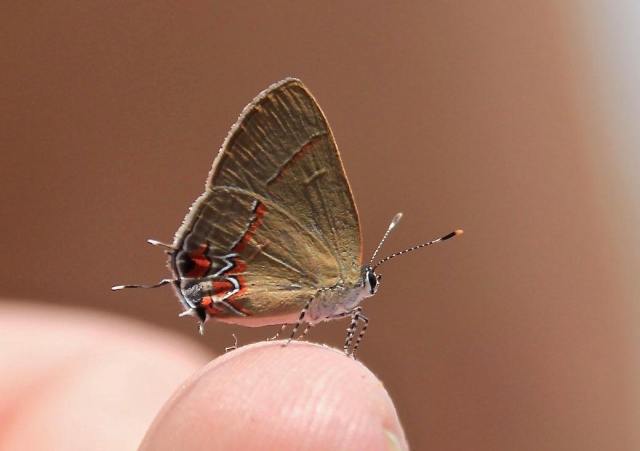
Another hitch-hiker

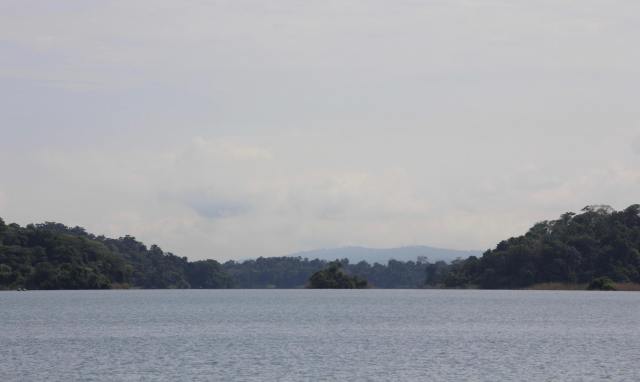
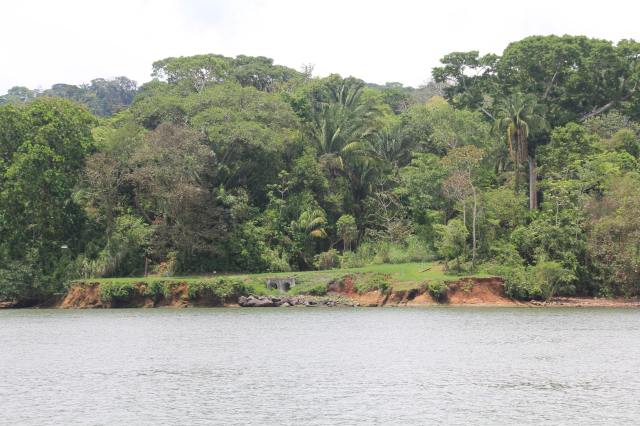
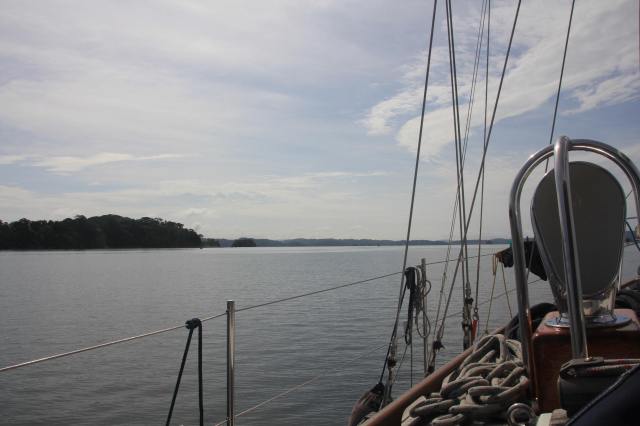
It took a few hours to motor across the lake and follow the channel towards the Pedro Miguel lock.  We were scheduled to enter the next lock at 14.40 so we had an hour to kill which gave us time to attach to a buoy at the entrance to Gaillard Cut, an excavated gorge 8 miles long, and have lunch together.

After a morning of glorious sunshine the dark clouds rolled in and the Panamanian rain started again just as we approached the next lock.  Pedro Miguel is a single lock going down into another lake and then a mile further we reached the final set of two locks, the Miraflores.  I had been in contact with my Mum via WhatsApp all morning as she tracked our progress, and she watched us in both the Gatun and Miraflores locks on the Canals webcams.  It was so nice to know she was watching us!

IMG_5601-squashed

IMG_5607-squashed

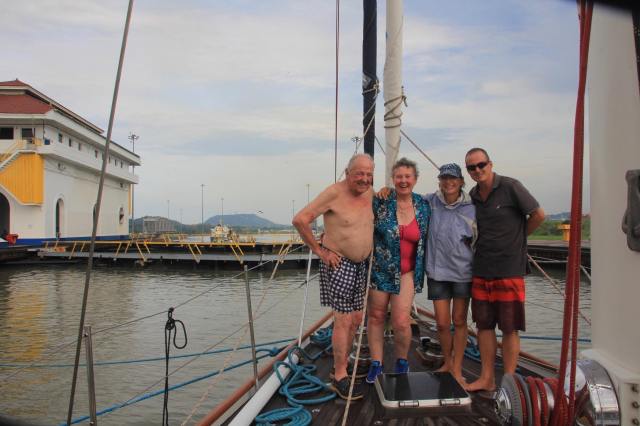
What a team! Our last set of locks before the Pacific
IMG_5611-squashed

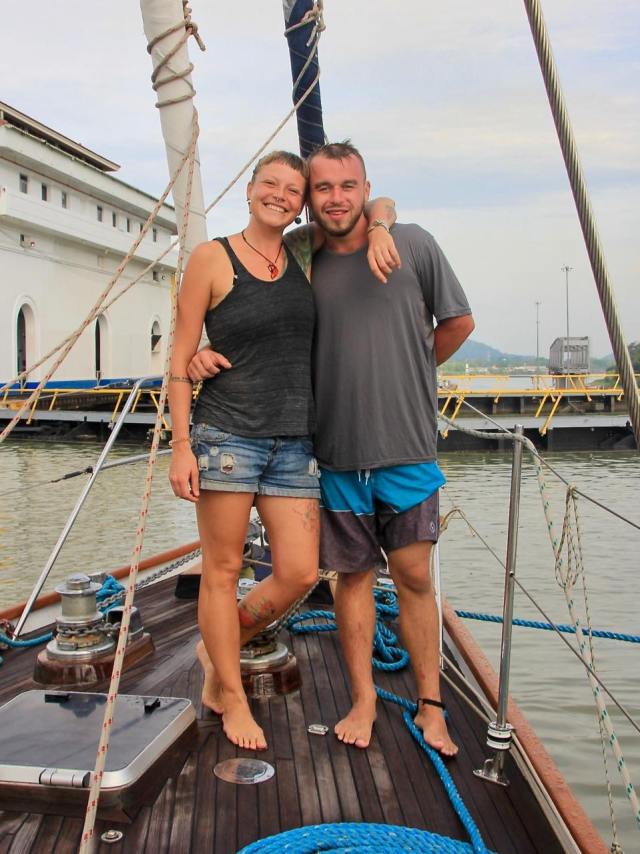
Our two very special volunteer helpers, Karolin and Patrick from Germany, helped make our transit a very smooth one even in the pouring rain, and were great fun to be with.

IMG_5614-squashed

IMG_5633-squashed

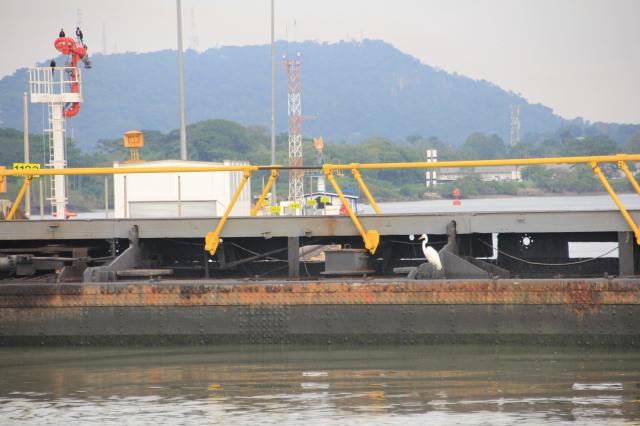
An egret uses the lock gate as a fishing hot spot
IMG_5629-squashed

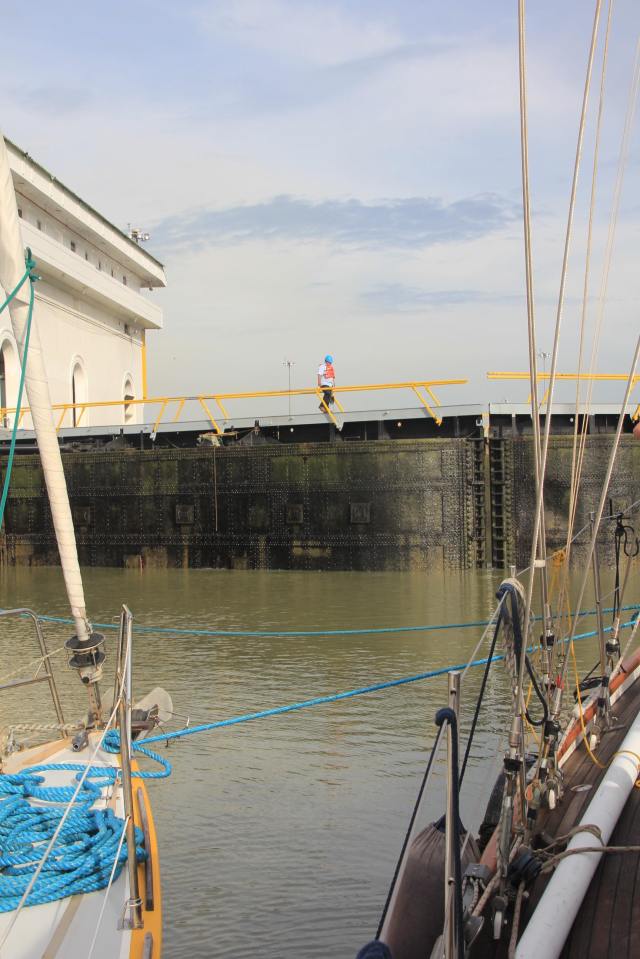
The locomotive track along the lock wall
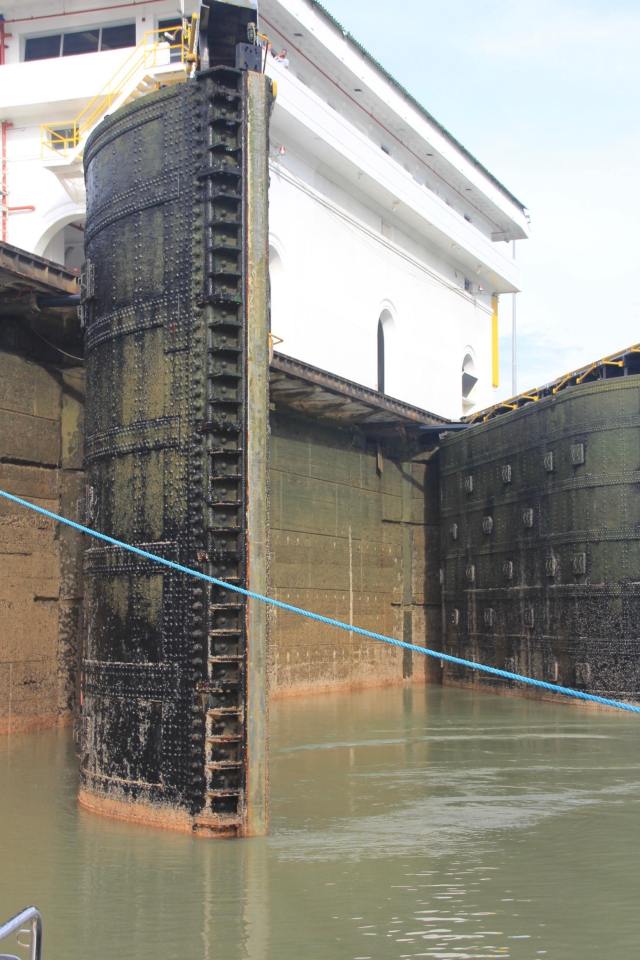
IMG_5626-squashed

IMG_5621-squashed

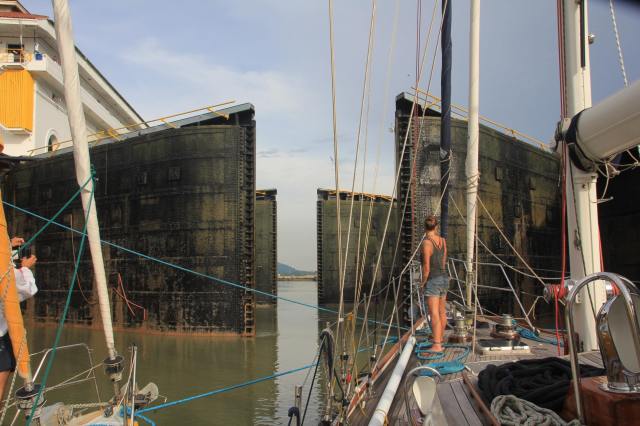
The gates open into our last lock before the Pacific as Karolin handles our bow line

IMG_5620-squashedIMG_5619-squashedIMG_5635-squashed

IMG_5647-squashed

This is it, hello Pacific Ocean!

IMG_5664-squashed

IMG_5658-squashed

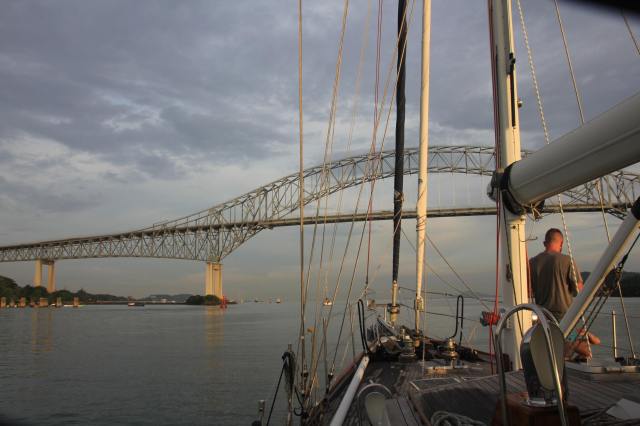
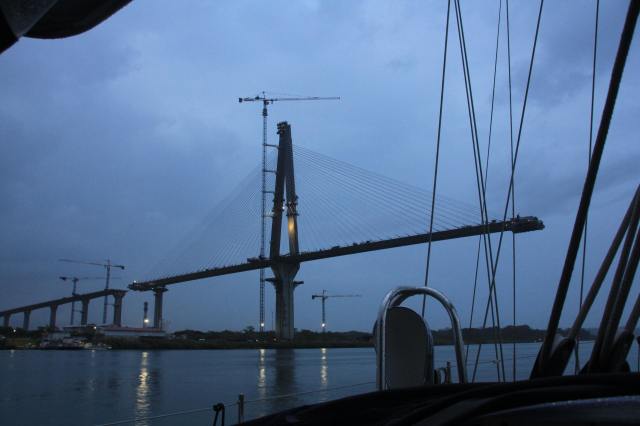
The Bridge of the Americas spans the entrance to the canal on the Pacific side
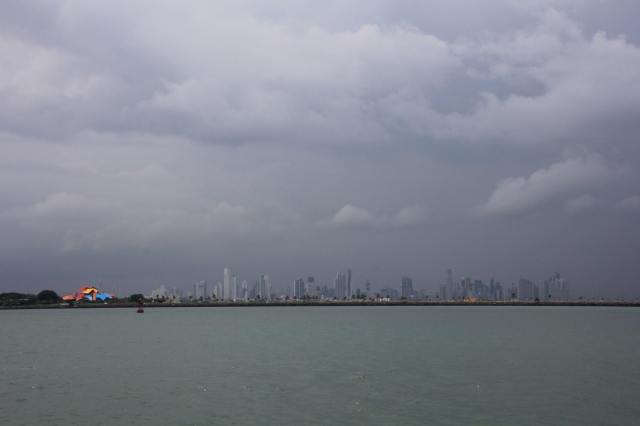
 

IMG_5676-squashed

Panama City


Moving from the first Miraflores lock to the second still nested with the other boats, the strong currents caused by seawater mixing with fresh can play havoc with boats, we had heard stories of yachts being turned 180 degrees by it and some have even hit the lock walls. Roy had pre-warned all three skippers and instructed each boat in how to manouevre to get through it without damage, and he executed the plan perfectly.  It was wonderful to share the whole experience with Geoff and Jane whose invaluable help with preparing not only Joy but also the food and drinks to keep the crew happy during the long transit was greatly appreciated.

The whole day had gone like clockwork with a great team on board Joy making our day a very special and memorable one.

Posted in Panama, Uncategorized | 1 Comment

Back on the road again!

It was a great feeling to relaunch Joy on 16th March, a little nerve wracking as we had serviced all the sea cocks which meant taking them all apart so we were anxious to make sure nothing was leaking when she ‘splashed’.  A guy on a neighbouring boat came over to congratulate us on all our hard work, saying he just didn’t know how we had done it.  Our long, long days hadn’t gone unnoticed, we often carried on working until gone midnight before showering and cooking, eating our dinner at 2am!  We must have kept other boat owners awake some nights still drilling and hammering under torch light.

We were more concerned about getting out of the haul out bay and back at anchor, but our new alternator had other ideas.  Good job we were the last launch on a Friday, as the alternator guy had to take it back to his workshop to make some adjustments.  Finally off the dock late the next day and out at anchor, we settled in for peaceful night back in the water. Until just before midnight when a Venezuelan fishing boat anchored nearby hit us bow first.  The new moon had stirred up some strong currents and pushed them into us.  A few young Venezuelan lads (these boats have about a dozen men on them) then jumped onto the bow to fender them off as their boat kept coming back for another go,  one stupidly put himself in between the two boats and almost got crushed,  luckily the only damage was a bent stanchion and scrape to the teak cap rail.  Neither boat could move as mother nature had wrapped our anchor chain and warps together, so we put out plenty of fenders and went to bed with our fingers crossed.  It was the following afternoon when we finally managed to get our anchor up  and move away.


We ambitiously thought it would take just a few days to get the inside of the boat back together and finish off, but it took three more weeks to get to a point where we could actually go to sea. Every other day brought more altercations with Venezuelans anchoring too close and had several more near misses.  Anywhere else this wouldn’t have been a problem, but Chaguaramas is a ‘special’ place with strange currents, lots of boat wake from pilot boats and commercial traffic. We have never been in an anchorage where you need fenders out all the time.

Motoring out of Chaguaramas our GPS and instruments starting playing up, so once we were out of the channel and into open sea we set our sails and powered down all equipment and I sailed for a couple of hours with just the wind vane and compass for company while Jez stripped out another cupboard, chased some wires and fixed the dodgy connection.  As the sun set on our first voyage in a few months, we reflected on all the hard work but whilst we were glad that we had chosen Peake’s yard in Trinidad we were very pleased to see the island disappear into the night.

IMG_5091IMG_5099IMG_5139

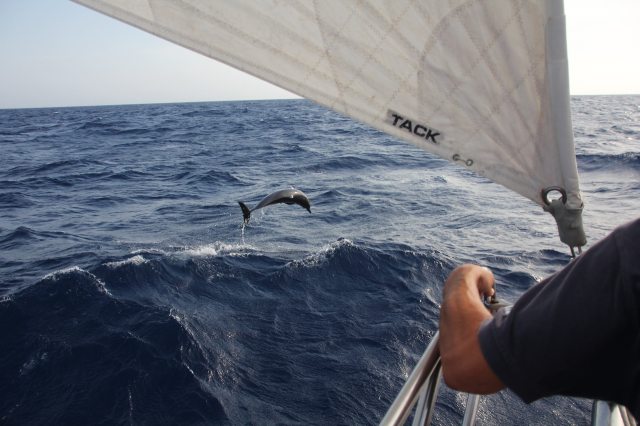
It took just 8 days to sail to Panama, one of the best and most memorable sails we have had since we left England 5 years ago.  A steady 20 knots with no squalls or strong gusts so we were able to fly our large reaching sail 24/7.  After three days of nothing on the end of the fishing line but occasional weed, the reel finally screamed and a huge mahi mahi took a 6ft leap out of the water in a bid to get rid of the hook and plastic squid he had just taken a bite of.  It took both of us to reel him in especially we were doing 8 knots and I can’t douse the reaching sail on my own so couldn’t slow the boat down safely, thankfully the rod and reel held up and my trusty gaff hook brought him on board.  Thirty-two portions of fish added to the freezer, that will make a nice change from chicken, chicken, or..chicken. The highlight of the passage had to be the dolphins and their fantastic displays, they stayed with us for hours and as the sun went down their acrobatic displays  began.

IMG_5179-squashedIMG_5166IMG_5164IMG_5138IMG_5120IMG_5109IMG_5250-squashedIMG_5248-squashedIMG_5247-squashedIMG_5234-squashedIMG_5251-squashedIMG_5256-squashed

IMG_5275

The best seat in the house

IMG_5312IMG_5313-squashedIMG_5314-squashedIMG_5315IMG_5340IMG_5373-squashedIMG_5357-squashedIMG_5354IMG_5352-squashed

The rod was retired for 24 hours until Jez realised that we could squeeze a little more in our small freezer with a bit more organisation.  Two more smaller fish took the bait the freezer was bulging at the seams.

After checking in with the officials in Panama I called the Canal office to check they had received our transit request which I emailed before we left Trinidad.  They speak very good English and indeed they had my request, I was to call the Admeasurer early the next morning to be told when we would measured. So we sailed straight to Shelter Bay marina that afternoon and were measured as promised the next morning.  He also completed all the paperwork and now we were ready to book our transit once we had visited the bank and paid the fees.  It was a bit disappointing after rushing around and paying the fees to find out the earliest date they could give us to transit was the 6th May, a wait of 18 days. But it has given us some time to get things prepared, so we headed back to anchor at Portobelo where Jez’s parents joined us as crew so they will be line-handling for us as well as a couple of very kind volunteers.

IMG_5411-squashed

Another little fishy caught on the way into Portobelo!

Back in Shelter Bay we discovered that they had changed our transit time from 4pm to 4am, so it has been a rush today to get everything ready as we were expecting most of Sunday to prepare.  So we will be transiting the canal in one day tomorrow instead of overnighting in Gatun Lake.

 Next stop Panama City and into the Pacific!


Posted in Panama, Trinidad | 4 Comments

Time for Some TLC in Trinidad

Even with worn out baggy sails, Joy roared her way down to Trinidad from Martinique, I think she knew she was headed for some pampering and a new wardrobe (I mean sails). Usually we are tweaking this and tweaking that, trimming sails to speed her up, but this passage was spent trying to slow her down so that we didn’t arrive ‘out of hours’ and incur customs overtime fees. By late afternoon on day two, the huge mountains of Trinidad were almost in view and after a pretty quiet couple of days with the occasional fishing boat and a brief encounter with dolphins, we were glad to be entering an area with abundant commercial traffic as this would help keep us awake on watch during the night. During the day we noticed that our Force 10 cooker had sheared one of the two bolts it gimbals on, leaving the cooker tilted and hanging on by the one remaining bolt.  Could have been catastrophic had we been cooking on it at the time, lucky it was only homemade pizza to reheat for dinner….delicately. Another job to add to the list. With two large ships showing up on AIS, one either side of us,  our 5 o’clock popcorn ritual was delayed (holding the pan over the flame now the cooker has a 30° tilt and is no longer gimballed). The strong current was pushing the tanker off our port side closer to us whilst the cargo ship to starboard was passing well behind although it looked like he was aiming straight at us. After a brief call to the tanker on VHF to inform him of our intentions, we rolled a little more headsail away to slow down further and allow them to pass in front of us. Relying on the wind to maintain its strength when in close quarters with such large craft is not a fun game of chicken.

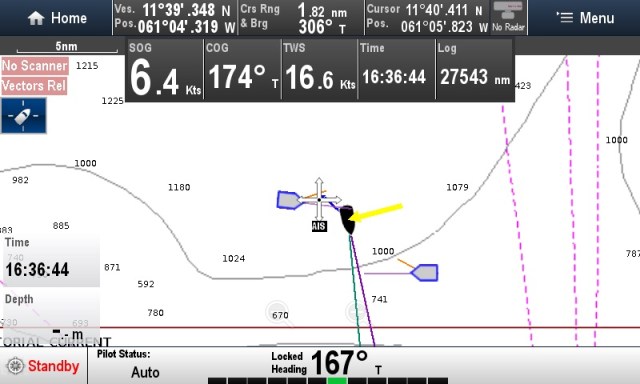
Screen shot AIS

A Joy Sandwich – We are the black boat in the middle (the yellow arrow is the wind direction) with the large commercial vessels either side.  The purple vector shows their heading, the red one is their actual course over ground (or sea), showing that even these large ships get affected by the strong current.

Shortly after dark a 65 metre research vessel called Fugro Brasilis popped up on our screen, he was moving in front of us and on AIS we could see he was towing and required a 2 mile clearance.  So we changed course a little and just as we were passing sufficiently behind him he suddenly made a complete u-turn and headed straight back towards us.  Jez called him on the radio, they agreed for us to pass ahead of them as they were towing a sonar surveying the sea bed and could not change course, it wasn’t difficult to speed Joy up to get ahead. Just as we were passing their bow they called us back,  a pod of dolphins had joined them to investigate their sonar and ruined their survey so they were turning around again to repeat it!  Made us chuckle, such inquisitive creatures.

Our early Friday morning arrival in glorious sunshine soon turned into a wet and soggy weekend in the grim commercial anchorage at Chaguaramas, getting ready for our Monday morning haul out at Peake Yachts.


What an efficient and professional haul out (other end of the scale completely compared with St Kitts 2 years ago) within an hour and a half we had been lifted with the help of a diver in the water placing the strops in the correct position, pressure washed, transferred to the trailer and trundled off to our spot at the other side of the yard and chocked on stands ready to be worked on.  The facilities are excellent here, it’s a clean & tidy yard with modern air-conditioned bathrooms (and I don’t mean a gap between the roof and the walls..St Kitts), laundry, snack/BEER shop and large chandlery, as well as a variety of workshops where you can get just about anything repaired.

After almost five weeks on dryish land, what have we achieved other than blisters, bruises, paint in hair, bat nesting in through-hull, zillions of mosquito bites, aching muscles we never knew we had and plenty blood, sweat ‘n tears – but not necessarily in that order.  Up and down the ladder a hundred times a day, up and down the staging, shifting the staging around, sanding and painting as well as Jez’s favourite and most frequent phrase “grab hold of the other end of this, sweetheart”  has all taken its toll and I am so stiff I am about as agile as an arthritic 90 year old. Well here goes in a nutshell in case you are wondering what has taken us so long:-

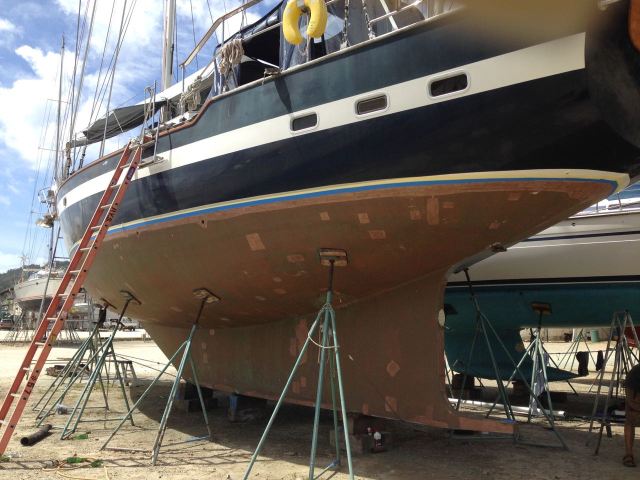
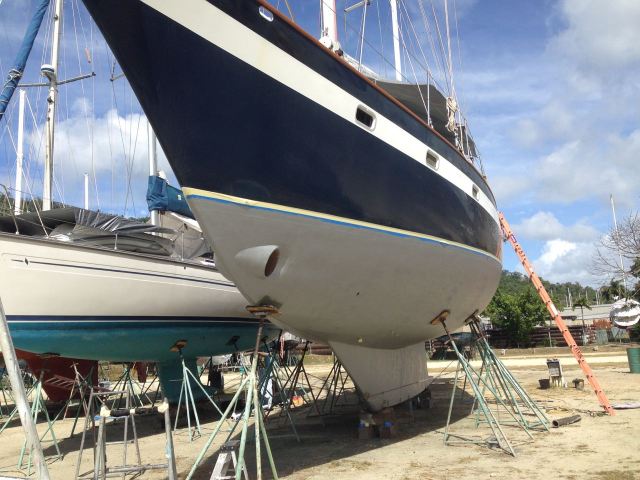
Propeller off/serviced; rudder off using borrowed forklift and Jez’s home-made/farmered frame work out of gypsied scraps of wood, to keep it upright whilst off; prop shaft out/discovered to be bent 😦 /straightened in hydraulic press 🙂 ; stern tube out/repainted; cutlass bearings replaced/fun getting the old ones out; blisters on hull back to bare metal/lots of barrier coats/Coppercoat antifouling back on; waterline raised a couple of inches as we sit a little lower in the water with all our ‘stuff’ /Coppercoated; white stripe now on the waterline repainted; sanded fresh Coppercoat to reveal the copper only to discover large patches on the hull with virtually no Coppercoat left and back to barrier coats; give up on Coppercoat antifoul as poor Jez is fed up scrubbing and we don’t have the time/product/money to reapply all over; 4 gruelling days sanding the whole hull and keel; Jotun tie coat and 2 coats of nice toxic antifoul applied to hull and keel (sorry environment); discovered we have stray current on the boat which has caused the blistering on the hull; electrician took 5 hours to trace 3 culprits (ceilings down, floors up, cooker out, fridge out, cupboards apart) causing stray current 1) stereo/radio antenna 2) fuel gauge sensor, hasn’t worked properly in ages 3) WIFI antenna not isolated from mast; starboard anchor, chain and bow roller out/repainted under bow; alternator out/condemned/replaced; hydraulic ram on autopilot out/new seals; hydraulic pump for anchor windlass out/serviced & new seals; Jabsco water pumps serviced with repair kits from UK (UK £23, US & Carib $120!); cables run for new wind turbine; engine room floor repainted; area under stern tube/prop shaft repainted; forestay unattached/chain plate painted; plus lots of other little jobs and a fair bit of head scratching. Thank god for the two “B’s” – Beer and Biscuits.

Patched and sanded-squashed

Patched and sanded

Tie coat-squashed

Tie coat

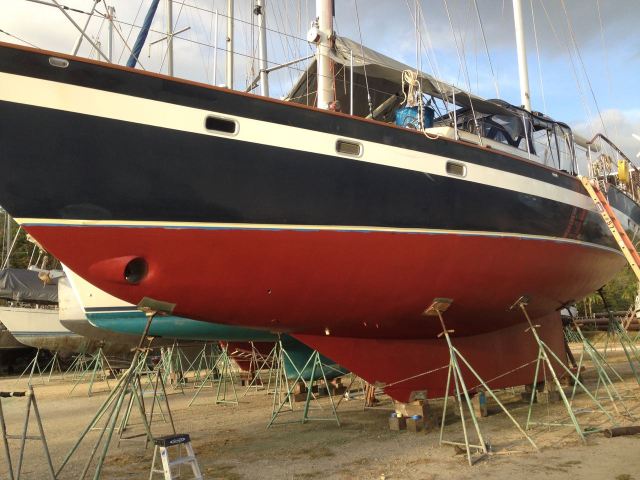
Lady in red-squashed

Lady in red – 1st coat of anti-foul

We have an equally long list of things still to do, but have finally turned a corner with the hull almost finished.  It takes a lot of time having to do all these jobs ourselves on our limited budget, we did ask for help once from ‘Mafia’ a local worker in the yard who has offered his services on numerous occasions. After two days sanding the starboard side with one worn out sander that won’t grip its pads and one newly acquired, we went to find him for a price to do the other side (end of tether moment) but Mafia was suddenly nowhere to be seen, I think he must have had a sense of what we were going to ask.  When Jez eventually found him a couple of days later he was working on another boat and would be busy until the weekend, we couldn’t wait that long so with a stiff upper lip and equally stiff muscles we soldiered on and got the job done. On Monday the blocks and stands are being moved so that we can paint where they have been, then the stern tube and prop shaft can go back in with the new prop shaft seal that has just arrived, propeller and rudder can then go back on.  Then we need to install some of the other parts we have received  We are very excited that our new main, mizzen and stay sails arrive in Trinidad on Sunday from North Sails UK so we should take delivery of them by the end of the week, can’t wait to get sailing again and try them out. So there is at last a glimmer of light at the end of this very long tunnel.
So how come I have time to sit and write this blog?  A day of torrential rain has meant I am on my list of ‘indoor jobs’. The weather has actually been pretty good up until now with the dry season in full swing, mainly sunny with occasional light showers which dry up quickly. Not today though.

IMG_4919-squashed

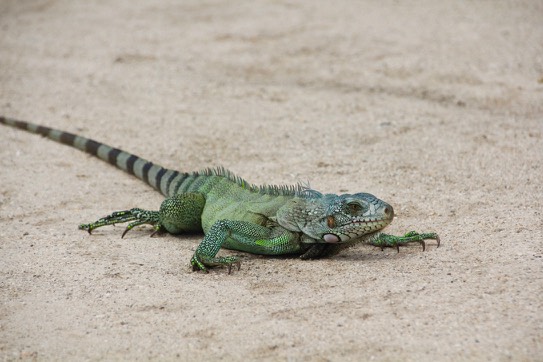
A beautiful Iguana soaks up the sun in the yard

IMG_4926-squashed

The sound of ‘beer o’clock’

IMG_4928-squashed

Don't Jump-squashed

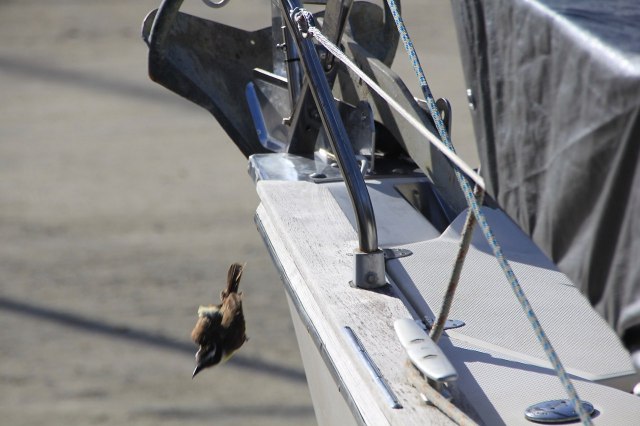
Dont jump..it can’t be that bad

Bomber-squashed.jpg

Bomber!

IMG_4946-squashed

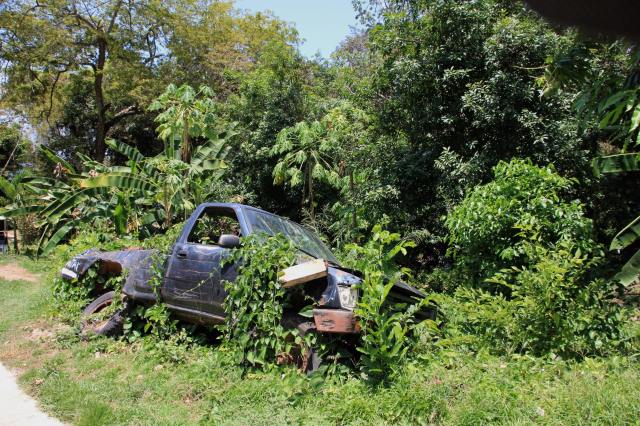
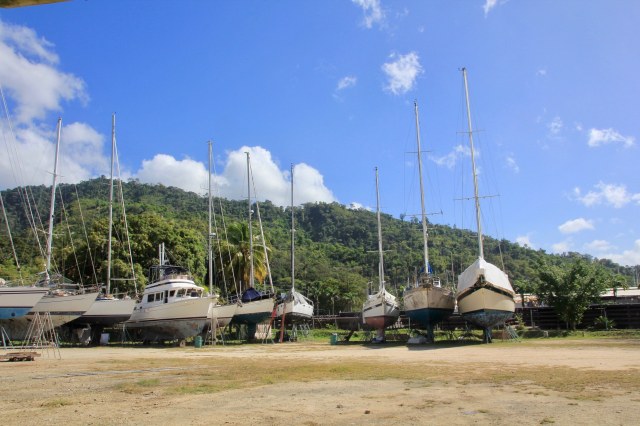
Our backyard

IMG_4956-squashed

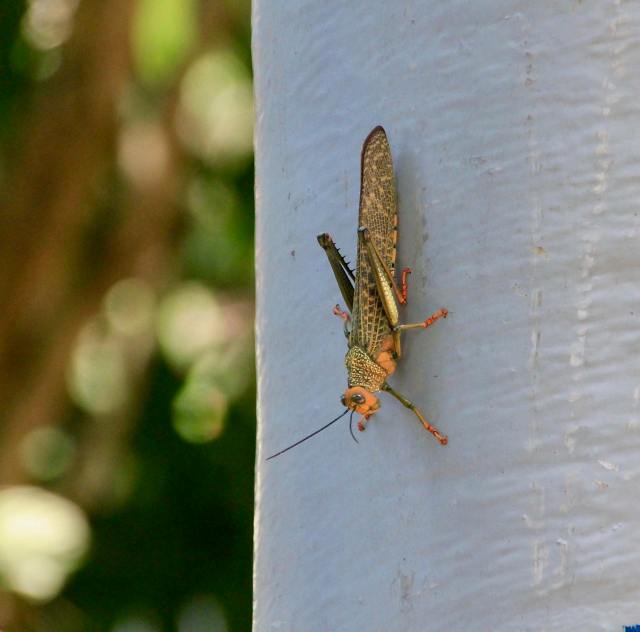
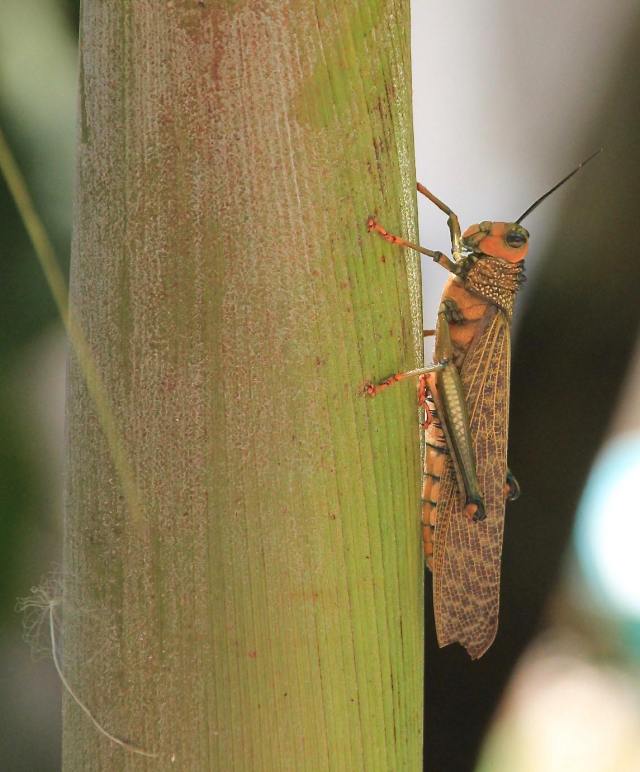
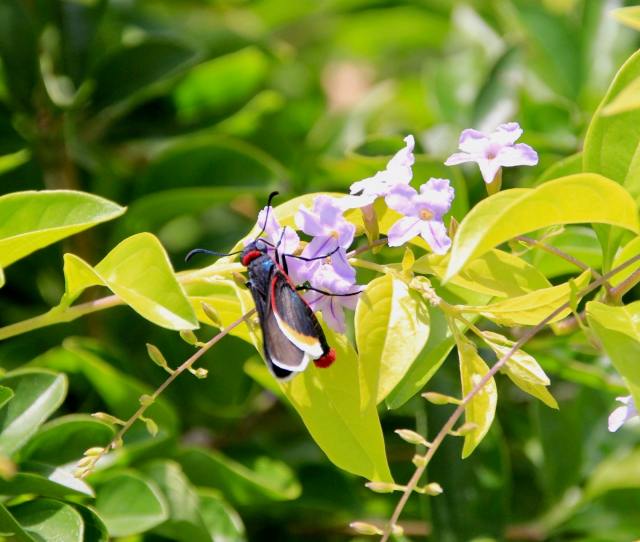
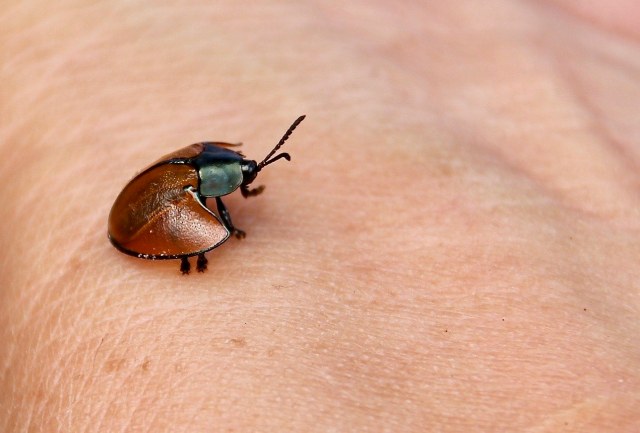
This little bug took quite a shine to Jez and needed a lot of encouragement to ‘buzz off’. What a beautiful translucent orange cape and the cutest feet!


Living in a boat in pieces on the hard is challenging and the mosquitoes and other biting things are quite immune to a bit of toxic Deet spray but on the plus side we have a wonderful chorus from all sorts of beautiful bird life signalling our early morning starts and of course beer o’clock, although only a quick beer of course as we carry on until 7-8pm. Apart from a very loud cricket who took up residency in the dorade vent above my side of the bed and kept me a wake all night with his chirping (lucky for Jez he is so deaf he didn’t hear it) it has been very peaceful here in the yard. I forced him out with a stick the next day, no spray required so it was a happy ending for us both. Who said boating was fun or relaxing?  But we know better things are to come.
Posted in Trinidad | 2 Comments